Disorganized or unorganized is a common word comparison that confuses many English learners and writers. Both words describe a lack of order, but they do not always serve the same purpose in a sentence. Understanding the difference can improve your writing and help you choose the most accurate word.
Many people use these terms interchangeably in everyday conversations. However, subtle differences in meaning, tone, and usage make one word more suitable in certain situations. This guide explains the meanings, examples, differences, history, usage patterns, and common mistakes related to disorganized and unorganized. By the end, you will know exactly which word fits your sentence and why.
Quick Answer (for Google Snippet)
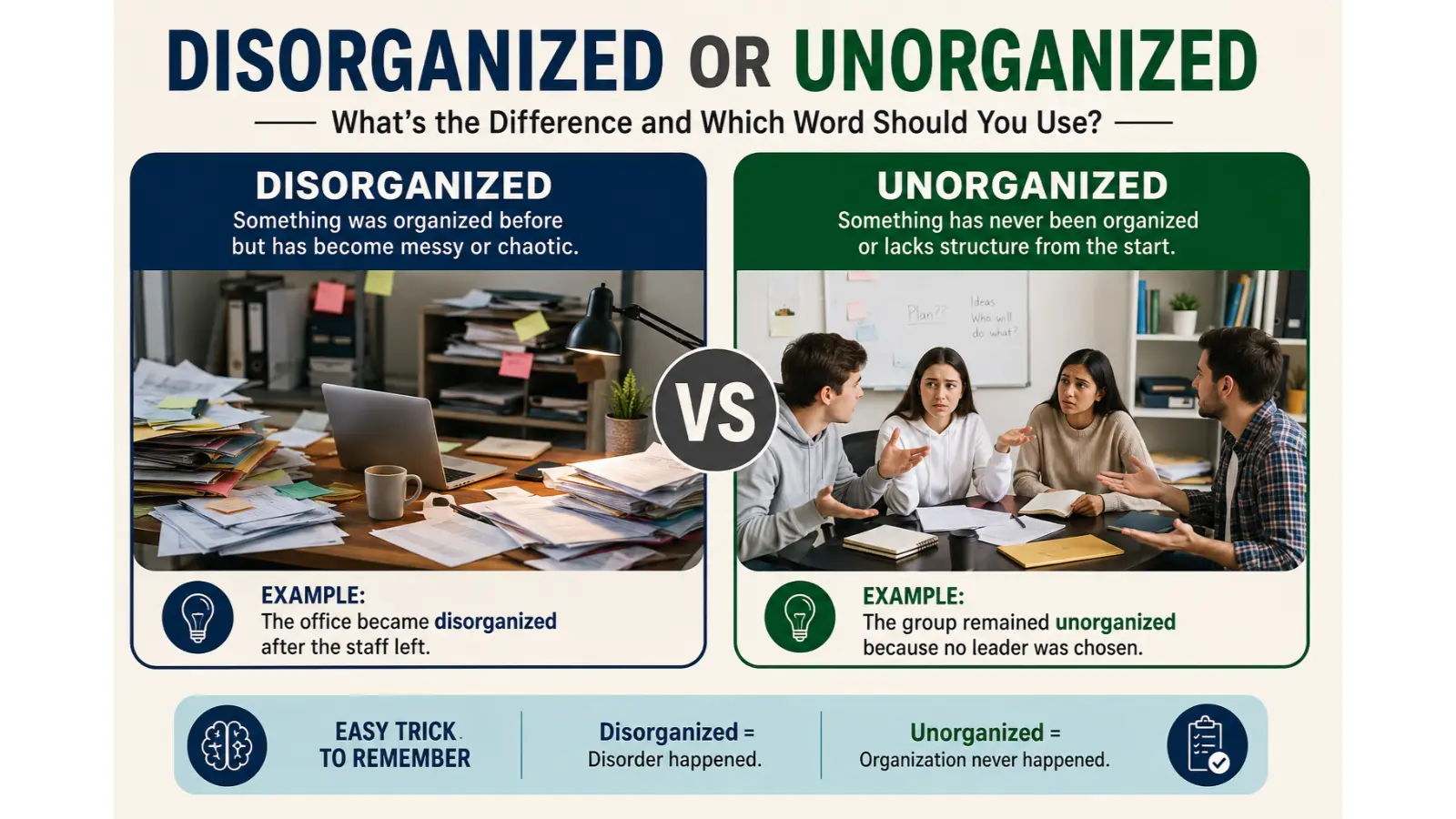
Disorganized usually means something was once organized but has become messy or poorly arranged. Something is generally considered unorganized when it has never been organized or when it lacks structure from the beginning.
Example:
- The office became disorganized after the move.
- The group remained unorganized because the committee did not appoint a leader.
Meaning of Disorganized
Disorganized means lacking order, structure, or proper arrangement. It often suggests confusion or poor management.
Examples
- Her desk is very disorganized, making files hard to find.
- The event became disorganized after several volunteers left.
Meaning of Unorganized
Unorganized means not organized or not arranged into a structured system. It often describes something that never had formal organization.
Examples
- The community remained unorganized during its early years.
- The workers formed an unorganized group without leadership.
Key Differences Between Disorganized and Unorganized

| Feature | Disorganized | Unorganized |
|---|---|---|
| Meaning | Poorly arranged or chaotic | Not organized from the start |
| Tone | More negative | More neutral |
| Usage | Common in daily English | Less common |
| Suggests Previous Order | Often yes | Usually no |
| Popularity | Higher | Lower |
Origin and History
Both words come from the verb organize, which originated from the Greek word meaning “instrument” or “tool.”
- Disorganized uses the prefix dis-, meaning apart, reversed, or lacking.
- Unorganized uses the prefix un-, meaning not.
Similar Word Examples
- Connected → Disconnected
- Structured → Unstructured
- Ordered → Disordered
- Prepared → Unprepared
Over time, disorganized became more popular because it better describes disorder and confusion in everyday situations.
British English vs American English Spelling
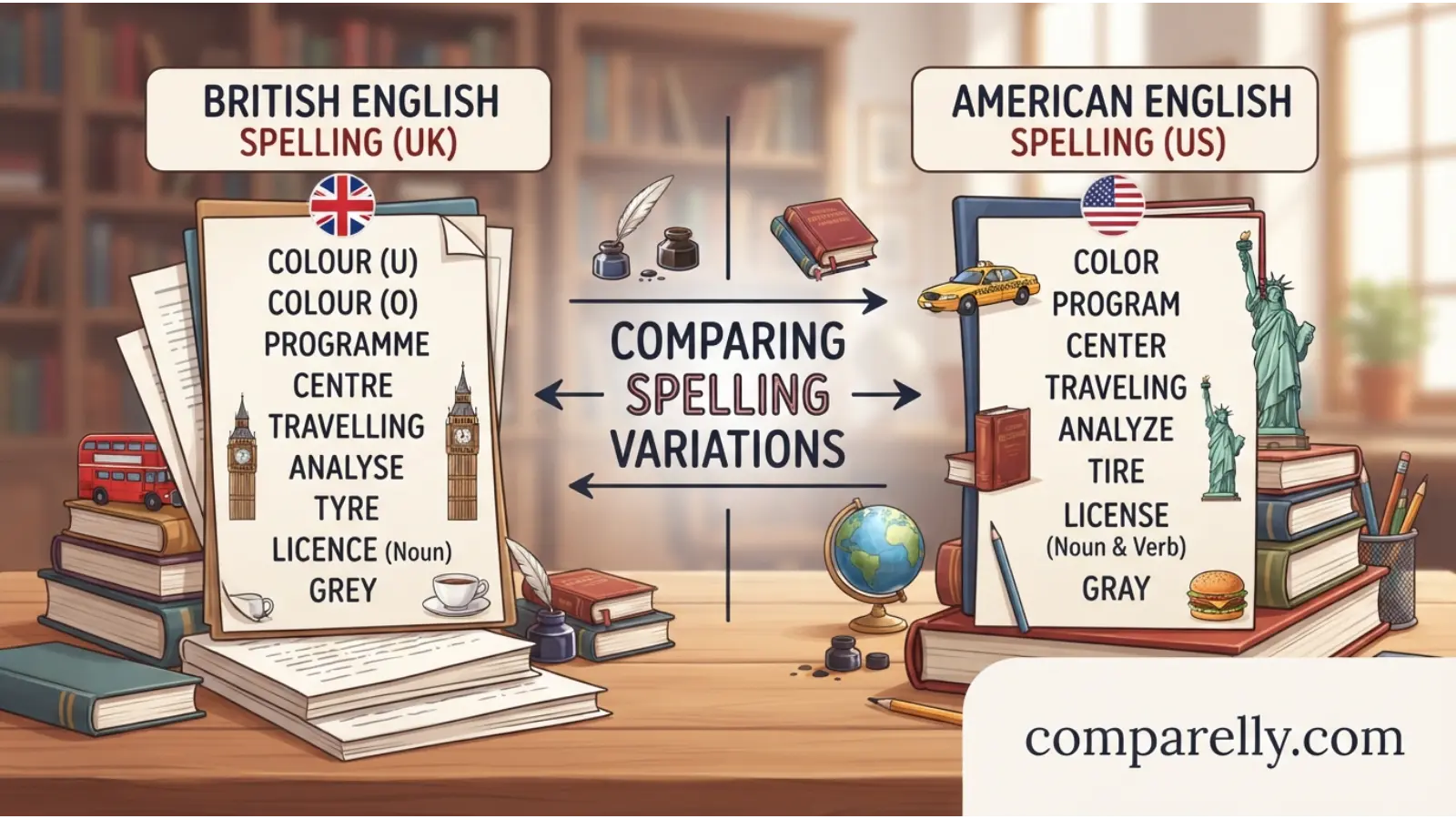
There is no spelling difference between British English and American English for these words. Both countries use disorganized and unorganized with the same spelling and similar meanings.
Comparison Table: British vs American English
| Word | British English | American English |
|---|---|---|
| Disorganized | Disorganized | Disorganized |
| Unorganized | Unorganized | Unorganized |
When to Use Disorganized
Use disorganized when something lacks order or has become messy.
Examples
- My notes are completely disorganized.
- The project became disorganized after management changes.
- A disorganized schedule causes delays.
When to Use Unorganized
Use unorganized when something has not been arranged into a system.
Examples
- The volunteers remained unorganized.
- The club was unorganized during its first month.
- The information was unorganized from the beginning.
Common Mistakes
Mistake 1
❌ The company is unorganized after the merger.
✅ The company is disorganized after the merger.
Mistake 2
❌ The new group became unorganized.
✅ The new group remained unorganized.
Mistake 3
❌ My room is unorganized.
✅ My room is disorganized.
Mistake 4
❌ The meeting was unorganized because plans changed.
✅ The meeting was disorganized because plans changed.
Easy Trick to Remember
- Disorganized = Disorder happened.
- Unorganized = Organization never happened.
Think of it this way:
Dis = disturbed order
Un = not yet organized
Write 5 Examples
School Example
The student’s notes were disorganized, making revision difficult.
Workplace Example
An unorganized team struggled to assign responsibilities.
Home Example
The garage became disorganized after years of storage.
Event Planning Example
The volunteers remained unorganized until a coordinator arrived.
Digital Files Example
Thousands of disorganized files slowed down the workflow.
Related Keywords
- disorganized meaning
- unorganized meaning
- disorganized vs unorganized
- difference between disorganized and unorganized
- organized and unorganized
- disorganized definition
- unorganized definition
Google Trends & Usage Data
Across the USA, UK, Australia, India, and Pakistan, disorganized receives significantly more usage than unorganized. It appears more frequently in books, articles, and online searches. Writers often prefer it because it clearly describes disorder or confusion. Unorganized remains common in specific contexts such as groups, labor organizations, and administrative structures.
Comparison Table: Keyword Variations
| Keyword Variation | Relative Popularity |
|---|---|
| Disorganized | Very High |
| Unorganized | Medium |
| Disorganized Meaning | High |
| Unorganized Meaning | Medium |
| Disorganized vs Unorganized | Growing |
| Organized vs Disorganized | High |
| Unorganized Group | Moderate |
Final Verdict
Disorganized is usually the better choice in modern English. It is more common and naturally describes messy, chaotic, or poorly arranged situations.
Use unorganized when referring to something that has not been formally organized or structured from the beginning.
For most everyday writing, disorganized is the preferred word.
FAQs:
Is disorganized correct?
Yes. Disorganized is a correct and widely used English word.
What is the difference between disorganized and unorganized?
Disorganized suggests disorder, while unorganized suggests a lack of organization from the start.
Which word is more common?
Disorganized is more common in modern English.
Which word is better for formal writing?
Both are acceptable, but disorganized is used more often in professional and academic writing.
Why does confusion exist?
Both words describe a lack of organization, so many people treat them as synonyms despite their subtle differences.
Conclusion
Disorganized or unorganized is a comparison that highlights two similar but slightly different words. While both refer to a lack of order, disorganized usually describes something messy, chaotic, or poorly arranged. In contrast, unorganized often refers to something that has never been formally structured. Understanding this distinction helps improve clarity and precision in writing.
In everyday English, disorganized is the more popular and natural choice. It appears frequently in conversations, business communication, and educational content. Unorganized still has value when discussing groups, systems, or situations that lack formal organization. Choosing the right word depends on the context, but in most cases, disorganized will be the better option

Daniel Foster is a comparison analyst and content strategist at Comparelly.com. He specializes in researching products, services, tools, and industry trends to create clear, unbiased comparison guides. With a focus on accuracy and practical insights, Daniel helps readers understand key differences and make informed decisions with confidence. His goal is to simplify complex choices through trustworthy, easy-to-understand content.