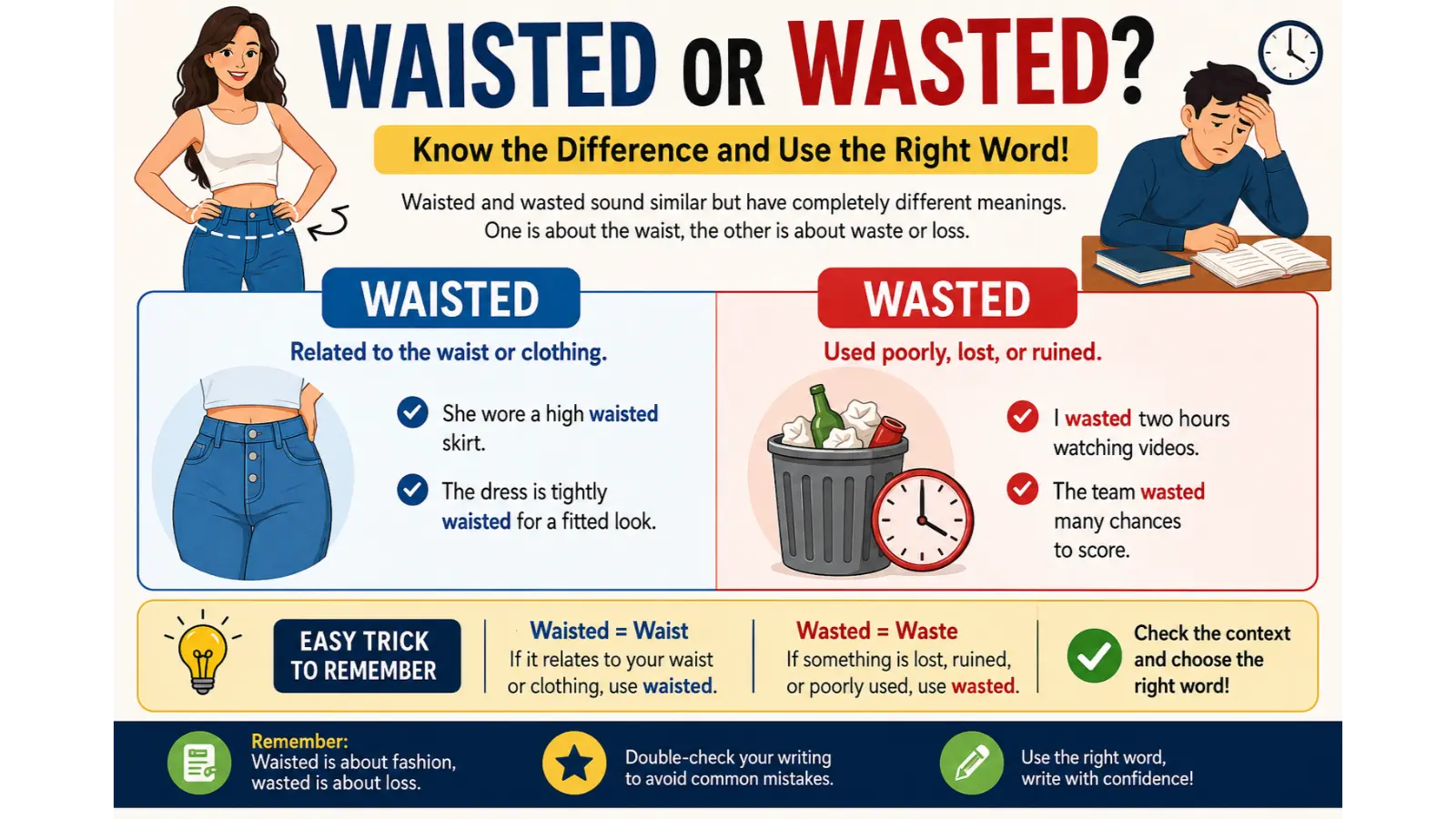
Waisted or wasted is a common word confusion in English. Many people use these words incorrectly because they sound alike. Since both words share similar spelling, it is easy to mix them up in writing.
The truth is that waisted and wasted have completely different meanings. One relates to the waist area of the body or clothing design, while the other refers to something used poorly, lost, or destroyed. Understanding the difference helps you write more clearly and avoid common mistakes. This guide explains the meanings, usage, examples, history, and simple memory tricks to help you choose the correct word every time.
Quick Answer (for Google Snippet)
Wasted means something was used poorly, lost, or ruined.
Waisted relates to the waist or a garment’s waistline.
Example
✅ I wasted two hours watching videos.
✅ She wore a high waisted skirt.
Meaning of Waisted
Waisted is an adjective related to the waist. It often describes clothing styles or body shape.
Examples
- She bought a high waisted pair of jeans.
- The dress is tightly waisted for a fitted look.
Meaning of Wasted
Wasted means used without purpose, lost, ruined, or not utilized properly.
Examples
- I wasted money on things I did not need.
- The team wasted many chances to score.
Key Differences Between Waisted and Wasted
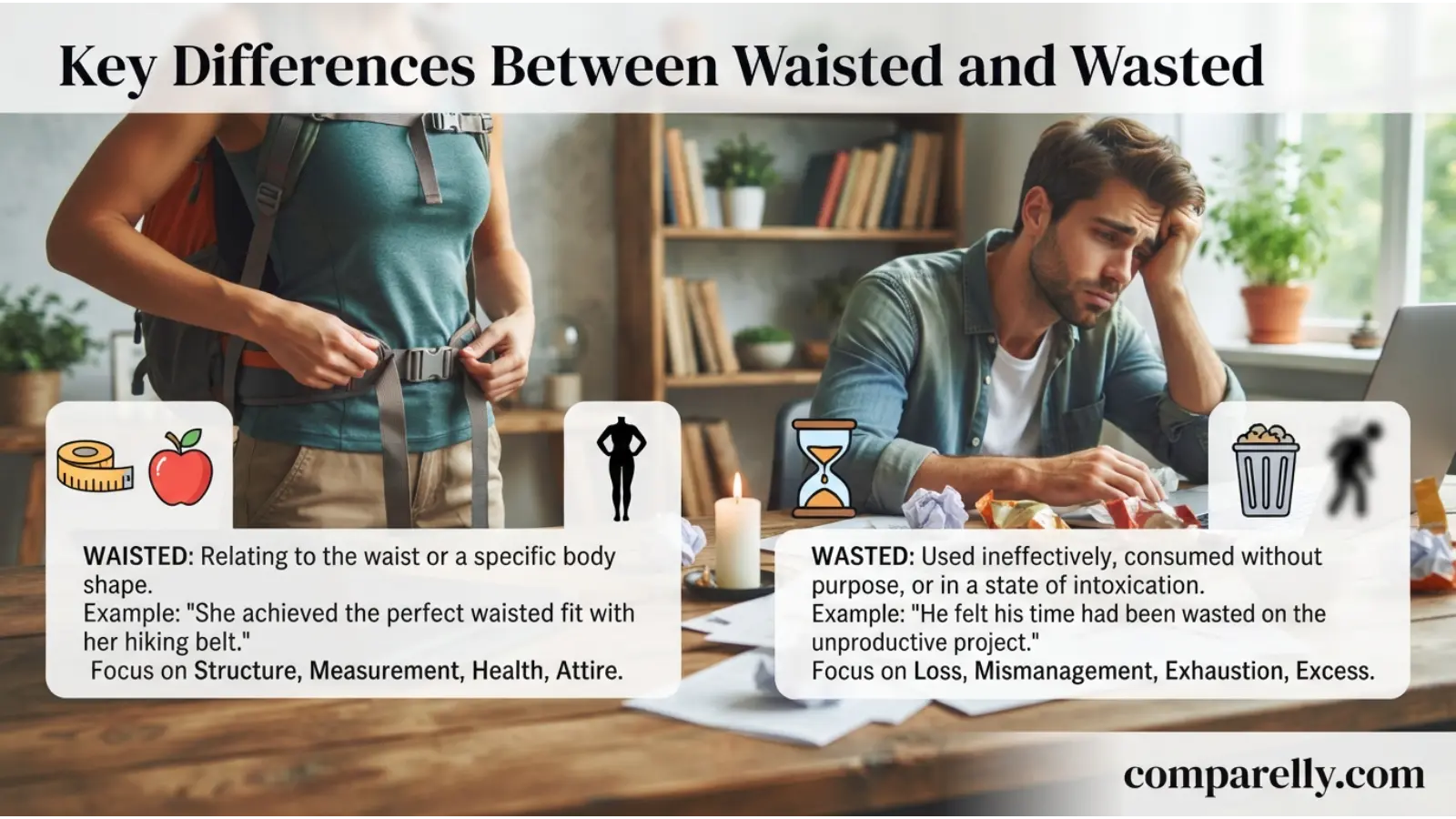
| Feature | Waisted | Wasted |
|---|---|---|
| Meaning | Related to the waist | Lost, ruined, or poorly used |
| Tone | Descriptive | Negative |
| Usage | Fashion and body shape | Time, money, effort, opportunities |
| Popularity | Less common | Very common |
| Part of Speech | Adjective | Adjective or verb |
| Context | Clothing | General everyday language |
Origin & History
Waisted
The word waisted comes from the noun waist. It has been used for centuries to describe clothing shapes and body proportions.
Wasted
The word wasted comes from the verb waste, which originated from old French and Latin roots meaning destruction or loss.
Similar Word Examples
- Waist → Waisted
- Taste → Tasted
- Waste → Wasted
- Haste → Hasted
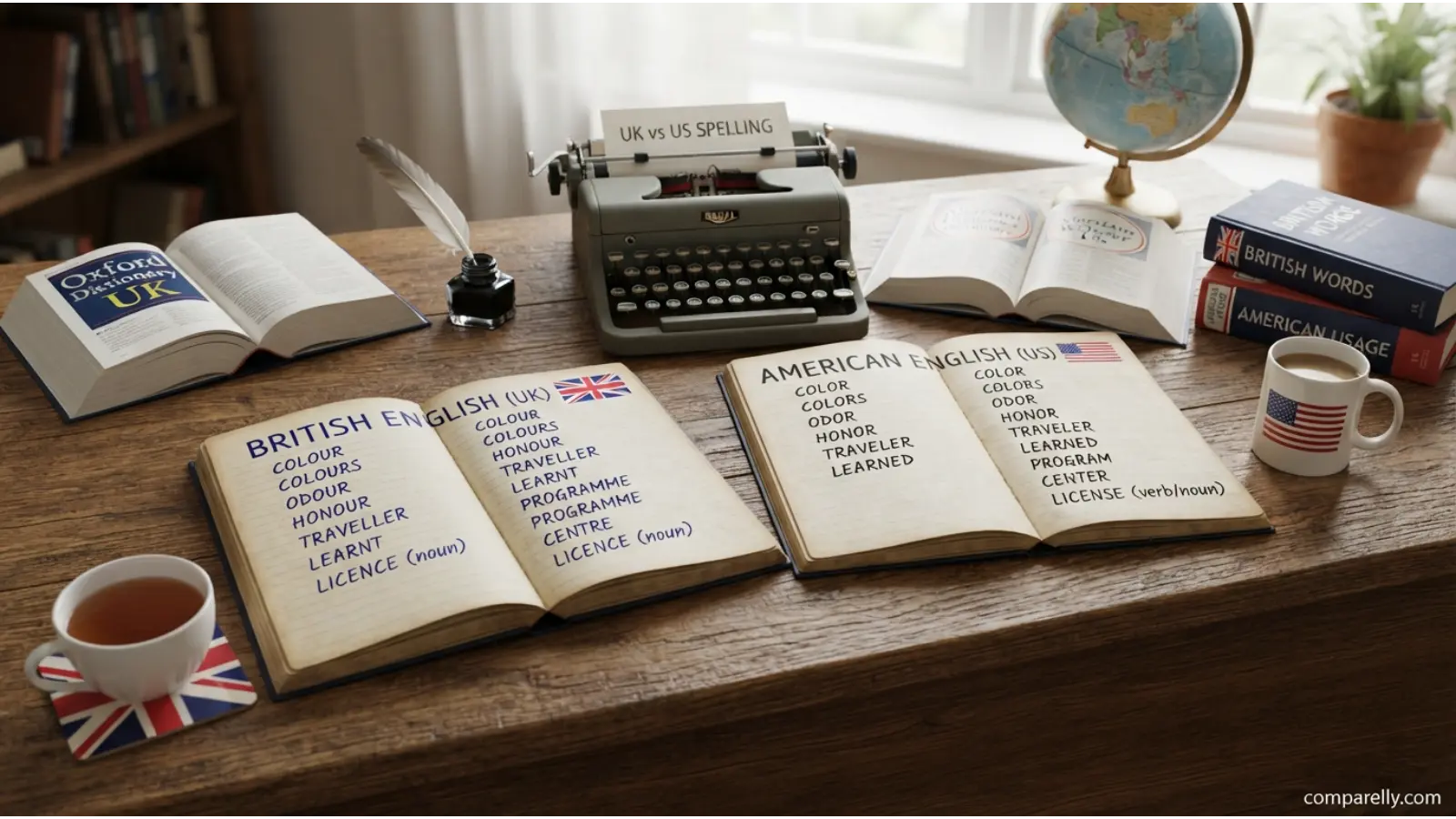
British English vs American English Spelling
There is no spelling difference between British and American English for waisted and wasted. Both countries use the same spellings and meanings.
Comparison Table
| British English | American English |
|---|---|
| Waisted | Waisted |
| Wasted | Wasted |
When to Use Waisted
Use waisted when discussing:
- Clothing styles
- Fashion designs
- Body shape descriptions
Examples
✅ She prefers high waisted trousers.
✅ The jacket is elegantly waisted.
When to Use Wasted
Use wasted when discussing:
- Time
- Money
- Effort
- Opportunities
- Resources
Examples
✅ He wasted his weekend doing nothing.
✅ The company wasted valuable resources.
Common Mistakes
Mistake 1
❌ I waisted three hours online.
✅ I wasted three hours online.
Mistake 2
❌ The wasted skirt looked stylish.
✅ The waisted skirt looked stylish.
Mistake 3
❌ She bought high wasted jeans.
✅ She bought high waisted jeans.
Mistake 4
❌ We waisted a great opportunity.
✅ We wasted a great opportunity.
Easy Trick to Remember
Waisted = Waist
If it relates to your waist or clothing, use waisted.
Wasted = Waste
If something is lost, ruined, or poorly used, use wasted.
Write 5 Examples
Example 1: Fashion Shopping
She bought high waisted jeans that matched her jacket.
Example 2: Time Management
I wasted an entire afternoon scrolling through social media.
Example 3: Clothing Design
The designer created a beautifully waisted dress.
Example 4: Money Spending
He wasted money on items he never used.
Example 5: Daily Conversation
People often confuse waisted and wasted because they sound similar
Related Keywords
- waisted vs wasted
- wasted meaning
- waisted meaning
- high waisted or high wasted
- wasted definition
- waisted definition
- common English word confusion
Google Trends & Usage Data
Across the USA, UK, Australia, India, and Pakistan, wasted receives significantly more searches than waisted. Most searches occur because people want to confirm the correct spelling. Fashion-related searches increase interest in waisted, especially for terms like “high waisted jeans.”
Insight
- Wasted dominates general English usage.
- Waisted appears mostly in fashion content.
- Search confusion remains common worldwide.
- Educational and grammar searches drive keyword interest.
Comparison Table: Keyword Variations
| Keyword Variation | Search Intent |
|---|---|
| waisted or wasted | Comparison |
| wasted meaning | Definition |
| waisted meaning | Definition |
| high waisted jeans | Fashion |
| wasted vs waisted | Grammar |
| wasted sentence examples | Learning |
| waisted dress meaning | Fashion |
Final Verdict
Wasted is the correct word when talking about lost time, money, effort, or opportunities.
Waisted is correct only when referring to the waist area or clothing styles.
The two words sound similar but have very different meanings. Choosing the right one depends entirely on the context.
FAQs:
Is waisted a correct word?
Yes. It is a valid word used mainly in fashion and clothing descriptions.
What is the difference between waisted and wasted?
Waisted relates to the waist. Wasted means lost, ruined, or poorly used.
Which word is more common?
Wasted is far more common in everyday English.
Which word is used in formal writing?
Both can be used in formal writing when they fit the context correctly.
Why does the confusion exist?
The words are pronounced similarly and differ by only one letter.
Conclusion
Waisted or wasted is a spelling confusion that many English learners encounter. Although the words look and sound similar, their meanings are completely different. Waisted relates to the waist or clothing design, while wasted refers to something lost, ruined, or used poorly. Understanding the context is the easiest way to choose the correct word. If you are talking about fashion, clothing, or body shape, use waisted. If you are discussing time, money, effort, or opportunities, use wasted. Remembering the simple connection between waisted = waist and wasted = waste can help you avoid mistakes and improve your writing confidence.

Daniel Foster is a comparison analyst and content strategist at Comparelly.com. He specializes in researching products, services, tools, and industry trends to create clear, unbiased comparison guides. With a focus on accuracy and practical insights, Daniel helps readers understand key differences and make informed decisions with confidence. His goal is to simplify complex choices through trustworthy, easy-to-understand content.