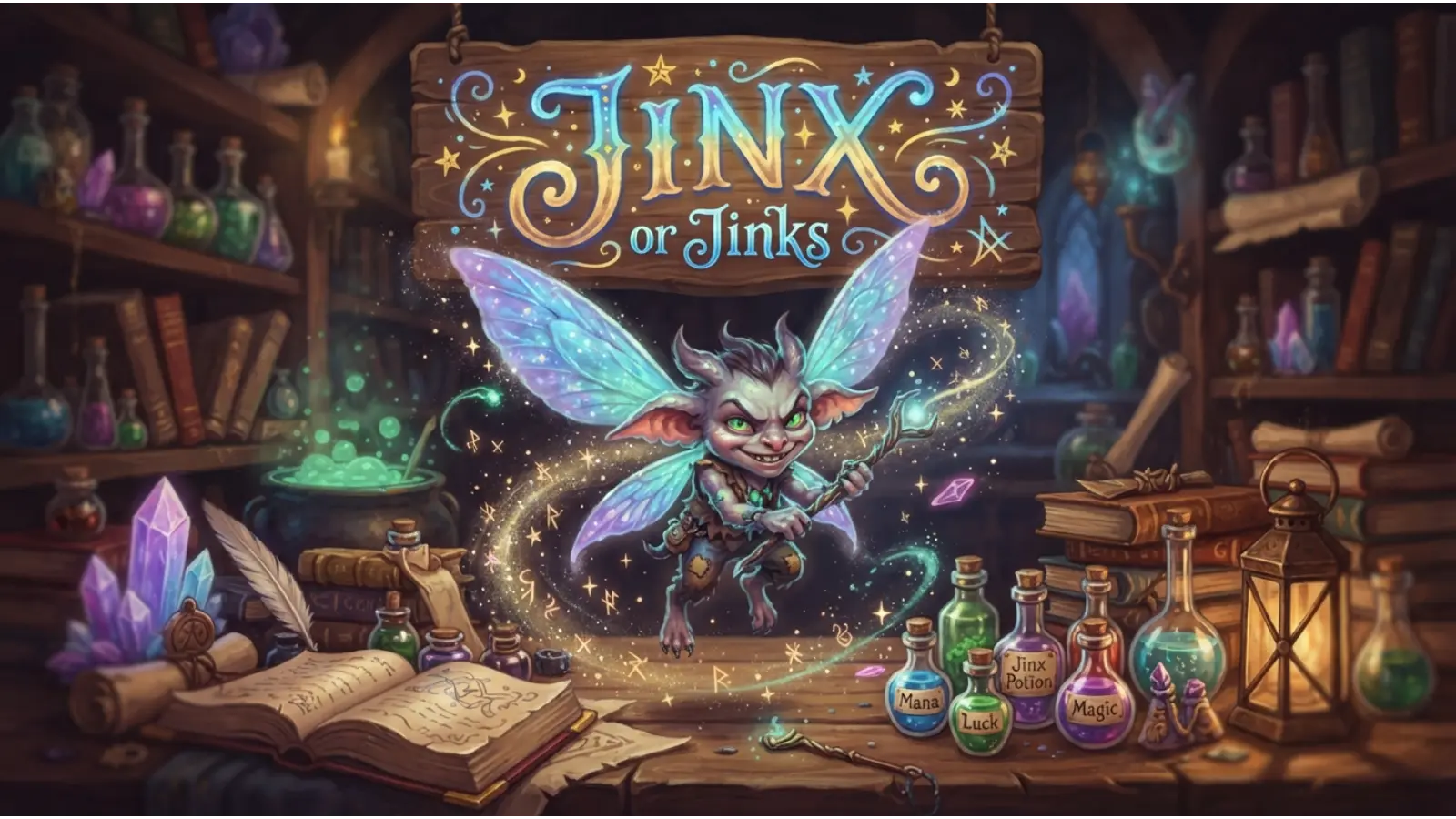
Jinks or Jinx can confuse writers because both words sound the same. However, they have different meanings and uses. Jinx usually means bad luck or something believed to cause bad luck.
Jinks is a real English word, but it has a different meaning. It often appears in the phrase “high jinks,” meaning playful or mischievous behavior. It can also relate to quick, sudden movements through the plural form of jink.
The confusion often comes from pronunciation. Both words are pronounced /dʒɪŋks/. They are therefore homophones in common English usage.
If you mean bad luck, jinx is the word you need. Use jinks only when its specific meaning fits your sentence.
Quick Answer
Jinx is correct when you mean bad luck, an unlucky person, or causing bad luck. Jinks is a separate word, mainly used for playful behavior or quick evasive movements.
Example: “I don’t want to jinx our chances.”
Meaning of Jinx
Jinx means bad luck or something believed to cause bad luck. It can work as both a noun and a verb.
As a noun, a jinx can describe an unlucky person, object, or situation.
As a verb, to jinx means to cause or bring bad luck.
Examples of Jinx
- “I hope I don’t jinx our plans.”
- “Some fans believe the player is a jinx.”
The word also appears in casual expressions such as “Don’t jinx it.”
Meaning of Jinks
Jinks is also a legitimate English word. It does not normally mean bad luck. Dictionaries associate it with playful, mischievous, or boisterous activity, especially in “high jinks.”
It can also be the plural of jink, which describes quick, sudden, evasive movements.
Examples of Jinks
- “The children enjoyed some harmless high jinks.”
- “The player’s sudden jinks confused the defender.”
So, jinks is not simply a misspelling of jinx. The two words have different meanings.
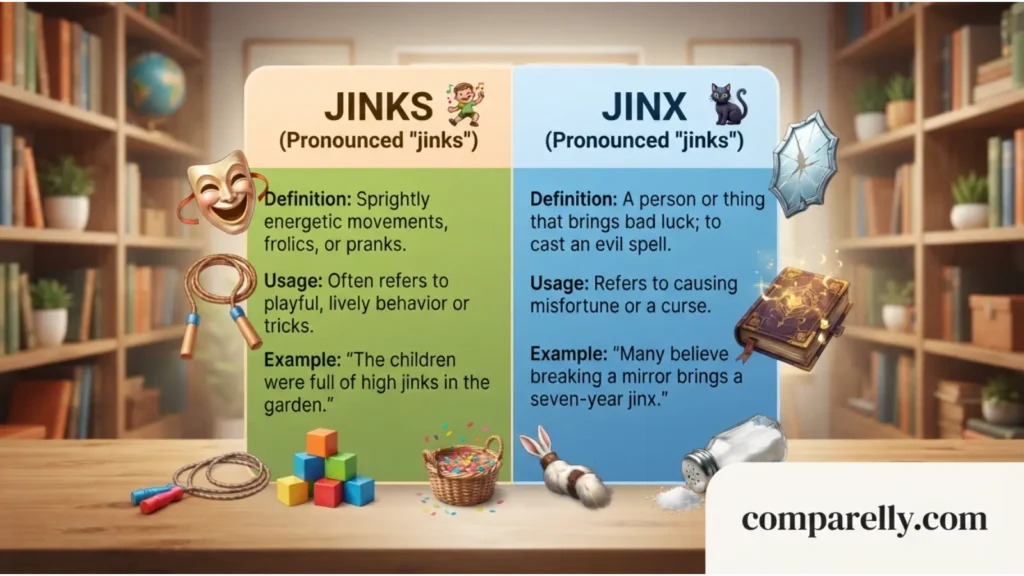
Key Differences: Jinks vs Jinx
| Feature | Jinks | Jinx |
|---|---|---|
| Meaning | Mischievous activity or quick movements | Bad luck or causing bad luck |
| Tone | Playful, lively, sometimes literary | Casual and conversational |
| Usage | Less common | Very common |
| Popularity | Low in everyday use | High in everyday English |
| Common phrase | High jinks | Don’t jinx it |
| Word type | Noun or verb form of jink | Noun and verb |
| Pronunciation | /dʒɪŋks/ | /dʒɪŋks/ |
| Correct for bad luck? | ❌ No | ✅ Yes |
The important point is simple: meaning determines the correct word.
Origin & History
The history of jinks and jinx follows different paths.
Jinks comes from jink. Merriam-Webster records jink from Scottish English, with its exact origin still unknown. The word describes quick or unexpected movements. Its noun form can describe pranks or frolics.
Jinx has a different history. The American Heritage Dictionary connects it possibly with jynx, a word linked to the wryneck bird and older beliefs about witchcraft.
Similar Word Examples
Other confusing word pairs include:
- There / Their
- Your / You’re
- Affect / Effect
- Then / Than
- To / Too
- Weather / Whether
- Jinks / Jinx
These pairs show why sound alone cannot determine spelling.
British English vs American English Spelling
There is no British-versus-American spelling difference for “jinx.”
British and American English both use jinx for bad luck.
Jinks remains a separate word in both varieties, especially in “high jinks.”
British vs American English Comparison
| Meaning | British English | American English |
|---|---|---|
| Bad luck | Jinx | Jinx |
| Cause bad luck | Jinx | Jinx |
| Playful activity | Jinks | Jinks |
| Common expression | High jinks | High jinks |
| Quick evasive movement | Jink/Jinks | Jink/Jinks |
Therefore, location does not change the spelling of jinx.
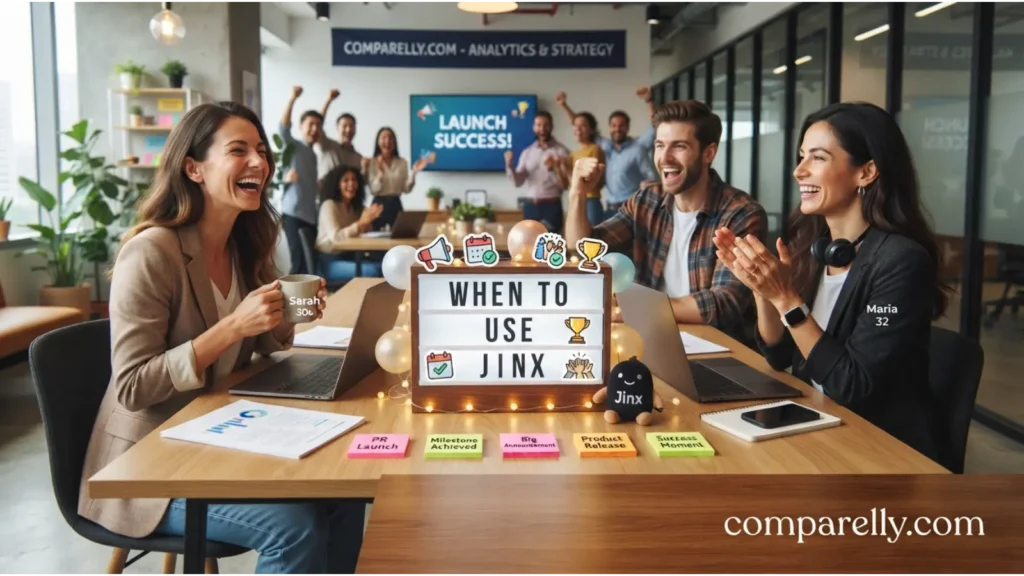
When to Use Jinx
Use jinx when your sentence involves bad luck, superstition, or an unlucky person or thing.
Common Uses
- “Don’t jinx our chances.”
- “I don’t want to jinx the result.”
- “That team seems to have a jinx.”
- “Talking about victory might jinx us.”
- “He thinks the old shirt is a jinx.”
You can use jinx in casual and formal writing when the meaning fits.
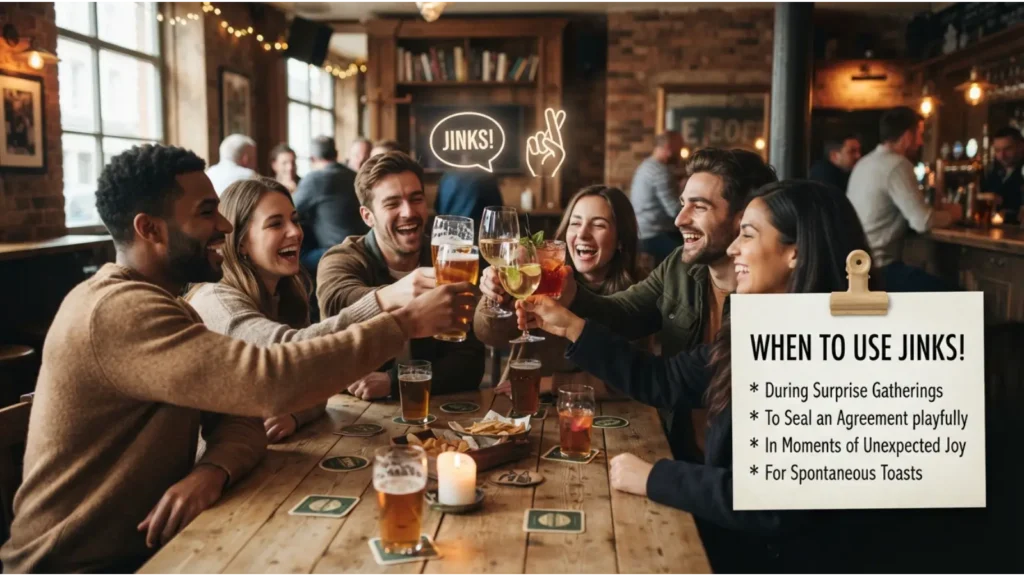
When to Use Jinks
Use jinks when you mean playful behavior or when discussing quick, evasive movements.
The most familiar expression is high jinks.
Common Uses
- “The children were up to high jinks.”
- “The party included plenty of high jinks.”
- “The player’s jinks confused his opponent.”
- “The dog made several quick jinks.”
- “Their weekend was full of harmless high jinks.”
Do not use jinks when you mean bad luck.
Common Mistakes
Mistake 1: Using Jinks for Bad Luck
❌ “Don’t jinks our chances.”
✅ “Don’t jinx our chances.”
Mistake 2: Writing Jinks When You Mean Jinx
❌ “I hope I don’t jinks it.”
✅ “I hope I don’t jinx it.”
Mistake 3: Treating Jinks as a British Spelling
❌ “British people spell jinx as jinks.”
✅ “British and American English both use jinx.”
Mistake 4: Calling Jinks Always Incorrect
❌ “Jinks is never a real English word.”
✅ “Jinks is a real word, especially in high jinks.”
Mistake 5: Assuming Similar Sound Means Similar Meaning
❌ “Jinks and jinx have the same meaning.”
✅ “Jinks and jinx sound alike but have different meanings.”
Easy Trick to Remember
Use this simple memory trick:
Jinx = bad luck.
Jinks = high jinks and playful activity.
Think:
Bad luck? JINX.
Fun and mischief? JINKS.
If you want to say “Don’t bring bad luck,” choose jinx.
If you want to describe playful behavior, choose jinks.
Everyday Life Examples
1. Sports Example
“Don’t jinx the team before the final whistle.”
Here, jinx means to bring bad luck.
Primary keyword: jinx
Secondary keyword: jinks or jinx
2. Family Example
“The children spent the afternoon enjoying high jinks.”
Here, jinks means playful or mischievous behavior.
Primary keyword: jinks
Secondary keyword: jinks or jinx
3. Work Example
“I don’t want to jinx the project by celebrating too early.”
The speaker fears causing bad luck.
Primary keyword: jinx
Secondary keyword: jinx spelling
4. Social Media Example
“Everything is going perfectly, so please don’t jinx it!”
This is a common informal use of jinx.
Primary keyword: jinx
Secondary keyword: jinks vs jinx
5. Storytelling Example
“The comedy was packed with harmless high jinks.”
Here, jinks describes lively and mischievous behavior.
Primary keyword: jinks
Secondary keyword: meaning of jinks
Related Keywords
Use these related terms naturally throughout supporting content:
- jinks or jinx
- jinks vs jinx
- jinx meaning
- jinks meaning
- jinx spelling
- jinks spelling
- is jinks a word
- high jinks meaning
- what does jinx mean
- what does jinks mean
- jinx vs jinks difference
Google Trends & Usage Data: USA, UK, Australia, India, Pakistan
Google Trends interest changes by date, location, and search context. Exact regional scores should therefore be checked for the selected time range.
Across English-language usage, jinx has much broader everyday meaning than jinks.
Jinks mainly appears in specific expressions, especially high jinks, or in dictionary-level vocabulary.
For SEO, jinx should target the broad term, while jinks or jinx should target spelling-confusion searches.
Country-Level SEO Insight
| Country | Primary Keyword | Secondary Keyword | SEO Insight |
|---|---|---|---|
| USA | Jinx | Jinks or Jinx | Target everyday bad-luck searches |
| UK | Jinx | High jinks | Include British usage examples |
| Australia | Jinx | Jinks | Focus on conversational English |
| India | Jinx | Jinks or Jinx | Address spelling confusion clearly |
| Pakistan | Jinx | Jinks or Jinx | Use simple English-learning examples |
The main SEO opportunity comes from explaining why both words exist. This approach avoids incorrectly calling jinks a simple spelling mistake.
Comparison Table: Keyword Variations
| Keyword Variation | Search Intent | Recommended Use |
|---|---|---|
| Jinks or Jinx | Spelling confusion | Main article keyword |
| Jinks vs Jinx | Comparison | Supporting heading |
| Jinx meaning | Definition | Supporting content |
| Jinks meaning | Definition | Supporting content |
| Jinx spelling | Spelling | FAQ or subheading |
| Is jinks a word? | Informational | FAQ |
| High jinks meaning | Definition | Supporting content |
| Jinx vs jinks difference | Comparison | Supporting content |
Final Verdict
Jinx is the better choice when you mean bad luck.
Use it for phrases such as:
- “Don’t jinx it.”
- “You jinxed our chances.”
- “That object is a jinx.”
- “He thinks the team has a jinx.”
Jinks is also a real word, but it has a different role.
Use jinks for playful activity, especially in high jinks, or for the plural of jink when discussing quick evasive movements.
So, if your sentence means bad luck, choose jinx.
FAQs:
1. Is “jinks” a correct word?
Yes. Jinks is a legitimate word. It can describe mischievous activity, especially in “high jinks.” It can also be the plural of jink.
2. What is the difference between jinks and jinx?
Jinx relates to bad luck or causing bad luck. Jinks relates to playful activity or quick evasive movements.
3. Which is more common, jinks or jinx?
Jinx is more common in everyday modern English. It is widely used as both a noun and verb.
4. Can jinx be used in formal writing?
Yes. Jinx is a standard dictionary word. Formal writers can use it when discussing bad luck, superstition, or related ideas.
5. Why does the confusion between jinks and jinx exist?
The main reason is pronunciation. Both words can sound the same. Their spellings and meanings are different, which creates confusion.
Conclusion
Jinks or Jinx is a common spelling and meaning question. The two words sound alike, but they do not mean the same thing. Jinx means bad luck, an unlucky influence, or the act of causing bad luck. Jinks usually refers to playful or mischievous behavior. It also appears in the familiar expression “high jinks.” Both words exist in English, so calling jinks simply “wrong” would be inaccurate. For everyday sentences about bad luck, always choose jinx. British and American English use the same spelling. Remember the easy rule: jinx means bad luck, while jinks means playful activity. This distinction will help you write clearly and confidently.

Daniel Foster is a comparison analyst and content strategist at Comparelly.com. He specializes in researching products, services, tools, and industry trends to create clear, unbiased comparison guides. With a focus on accuracy and practical insights, Daniel helps readers understand key differences and make informed decisions with confidence. His goal is to simplify complex choices through trustworthy, easy-to-understand content.