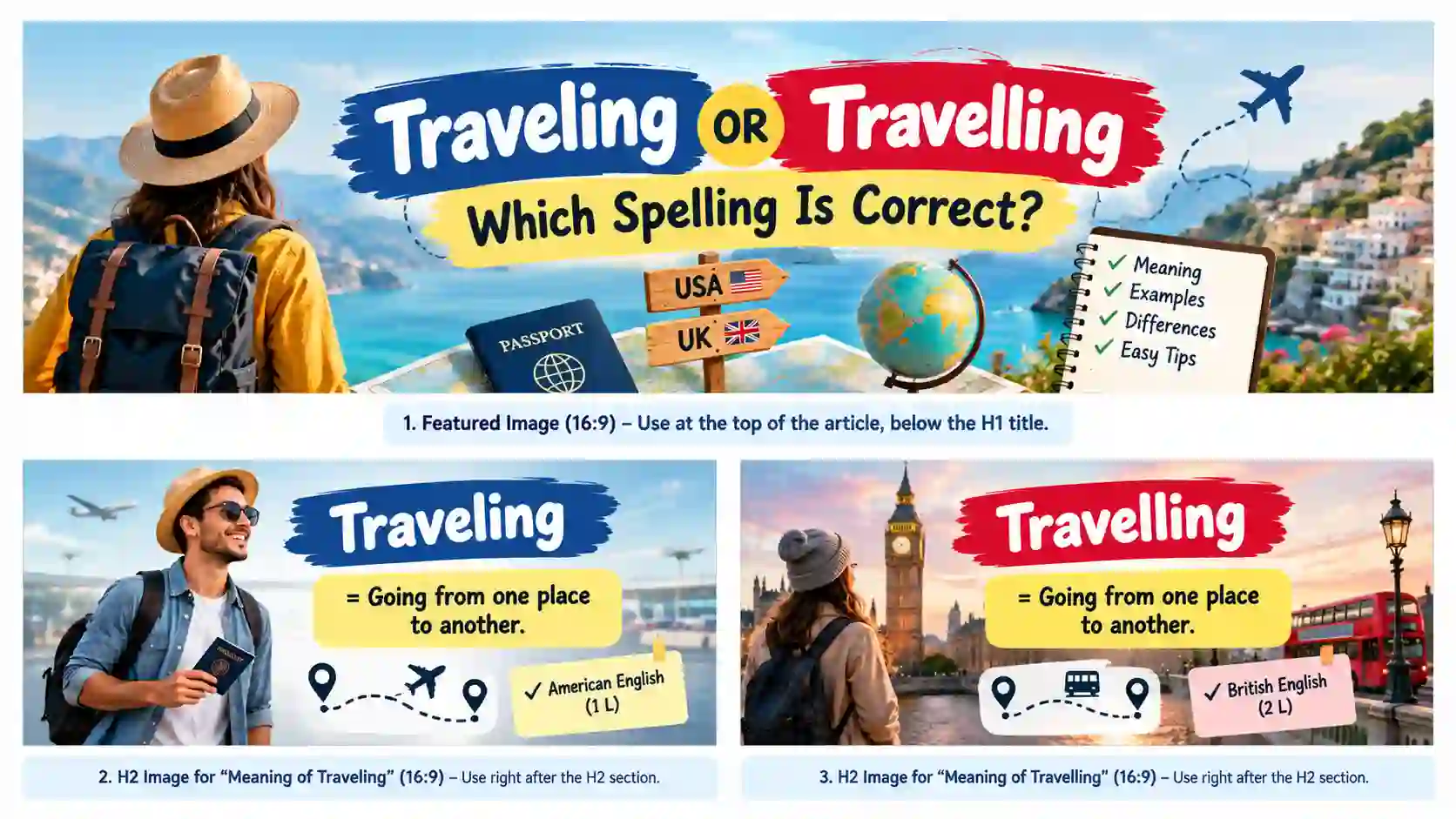
Traveling or travelling confuses many writers around the world. Both spellings mean the same thing. Both describe the act of going from one place to another. The confusion comes from a simple spelling rule that changes across regions.
One spelling doubles the letter “l.” The other keeps just one. This small difference depends on where you live and who you write for. In this guide, you will learn the exact rule behind traveling or travelling. You will see clear examples, common mistakes, and an easy trick to remember which spelling fits your writing. By the end, you will never second-guess this word again.
Quick Answer
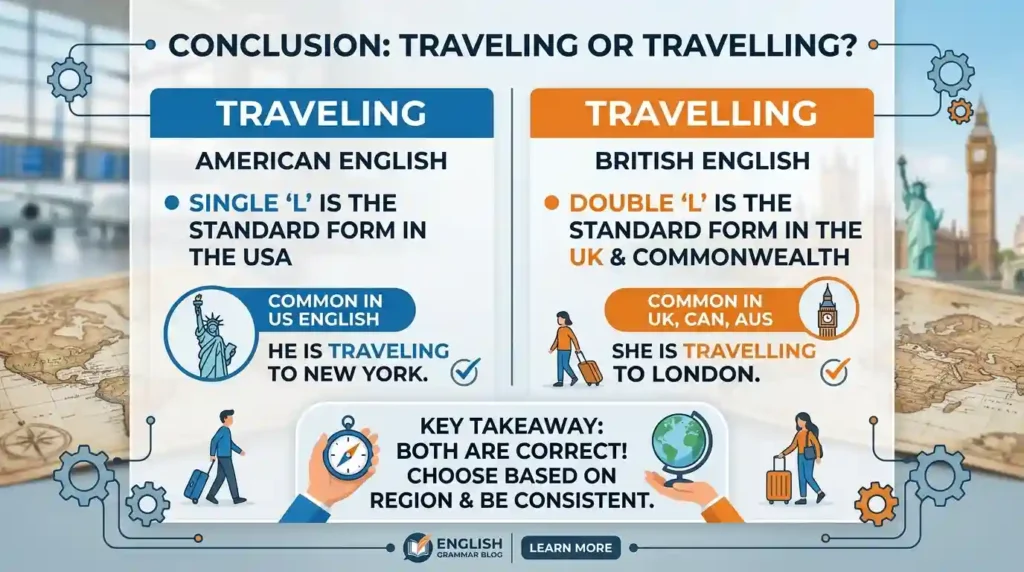
Traveling is the American English spelling, with one “l.” Travelling is the British English spelling, with two “l”s.
Example: “She is traveling to Paris next week.” ✅ (American) Example: “She is travelling to Paris next week.” ✅ (British)
Meaning Section
Meaning of Traveling
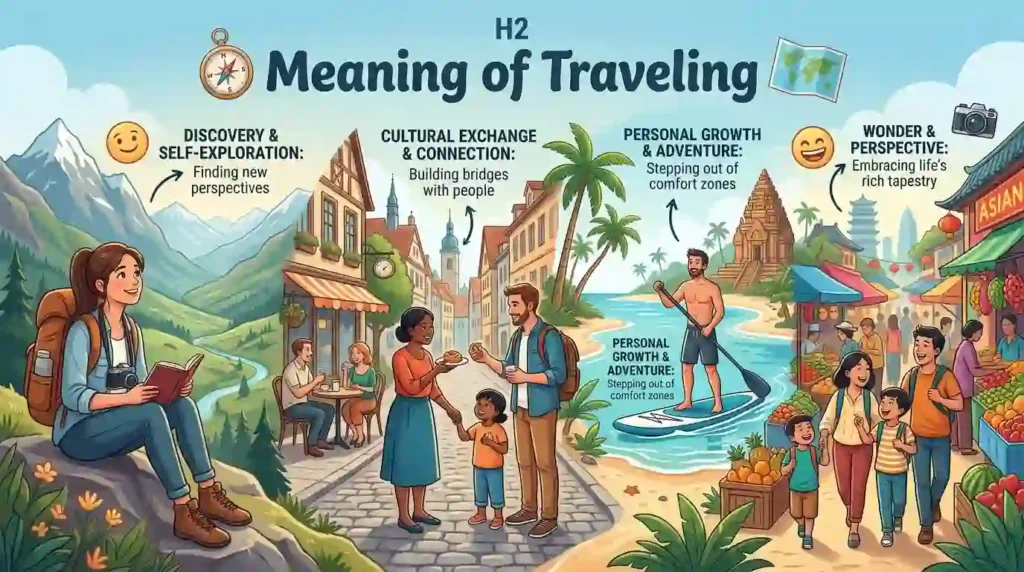
Traveling means moving from one place to another, using the American spelling style.
Examples:
- He enjoys traveling to new countries every year.
- We are traveling by train this weekend.
Meaning of Travelling

Travelling means the same action, but uses the British spelling style.
Examples:
- She loves travelling around Europe in summer.
- They are travelling to London for a conference.
Key Differences Table
| Feature | Traveling | Travelling |
|---|---|---|
| Meaning | Moving from place to place | Moving from place to place |
| Tone | Neutral, informal-friendly | Neutral, slightly formal-looking |
| Usage | American English writing | British English writing |
| Popularity | High in the USA and Canada | High in the UK, Australia, and India |
Origin & History
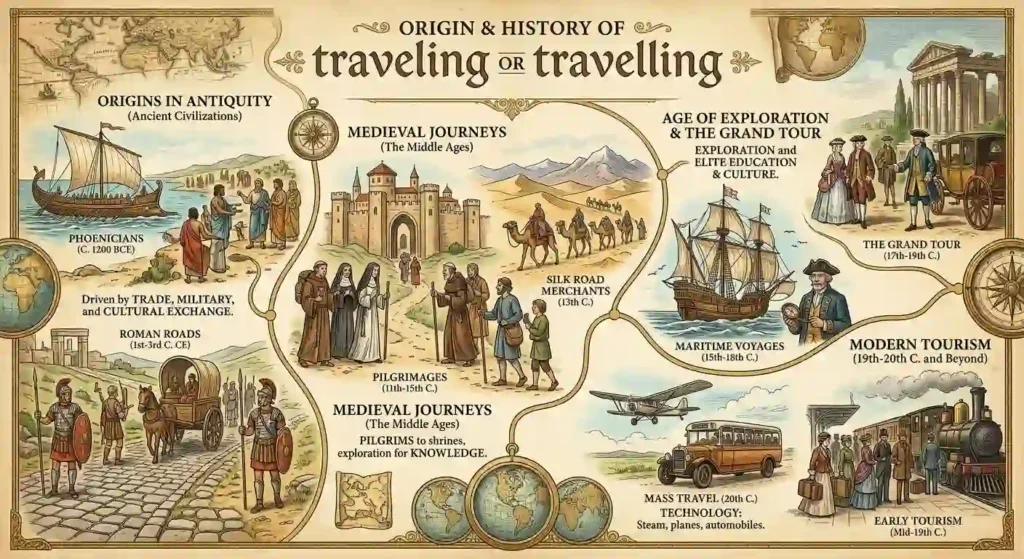
Both words come from the Old French word “travail,” meaning hard work or labor. Early travel was difficult, so the word carried a sense of struggle. Over time, “travel” softened to mean simple movement or a journey.
Similar spelling pairs include “canceled/cancelled” and “modeling/modelling.” These pairs follow the same doubling rule based on region.
British English vs American English Spelling
American English usually keeps a single consonant when adding “-ing” to short verbs. British English often doubles the final consonant instead. This rule explains why “travelling” has two “l”s in British spelling.
Comparison Table: British vs American English
| Word | British English | American English |
|---|---|---|
| Travel + ing | Travelling | Traveling |
| Cancel + ed | Cancelled | Canceled |
| Model + ing | Modelling | Modeling |
When to Use Each Word
When to Use “Traveling”
Use “traveling” if you write for American or Canadian audiences.
Examples:
- The company covers traveling expenses for employees.
- Traveling alone can be a great learning experience.
When to Use “Travelling”
Use “travelling” if you write for British, Australian, or Indian audiences.
Examples:
- Travelling by bus is cheaper than flying.
- She wrote a blog about travelling through Asia.
Common Mistakes
- Incorrect: He is traveling and travelling in the same paragraph. Correct: Pick one spelling and use it consistently throughout.
- Incorrect: We enjoyed travelling to New York for the conference. (in strict American content) Correct: We enjoyed traveling to New York for the conference.
- Incorrect: Traveling insurance is required for the trip. (in strict British content) Correct: Travelling insurance is required for the trip.
- Incorrect: She loves travveling around the world. Correct: She loves traveling or travelling around the world.
Easy Trick to Remember
Think: “American English likes it simple, British English likes it double.”
One “l” means American. Two “l”s mean British. Match your spelling to your audience.
Everyday Life Examples
1. Planning a Vacation
We are traveling to Italy for our anniversary trip.
2. Writing a Travel Blog
Her blog post about travelling through Japan went viral.
3. Business Trips
The manager approved traveling expenses for the sales team.
4. Studying Abroad
Students often enjoy travelling while studying in another country.
Related Keywords
- Traveling vs travelling spelling
- Travelling or traveling correct
- British spelling of traveling
- American spelling of travelling
- Traveling grammar rule
- Travelling meaning and usage
- Traveling or travelling difference
Google Trends & Usage Data (USA, UK, AUS, IND, PAK)
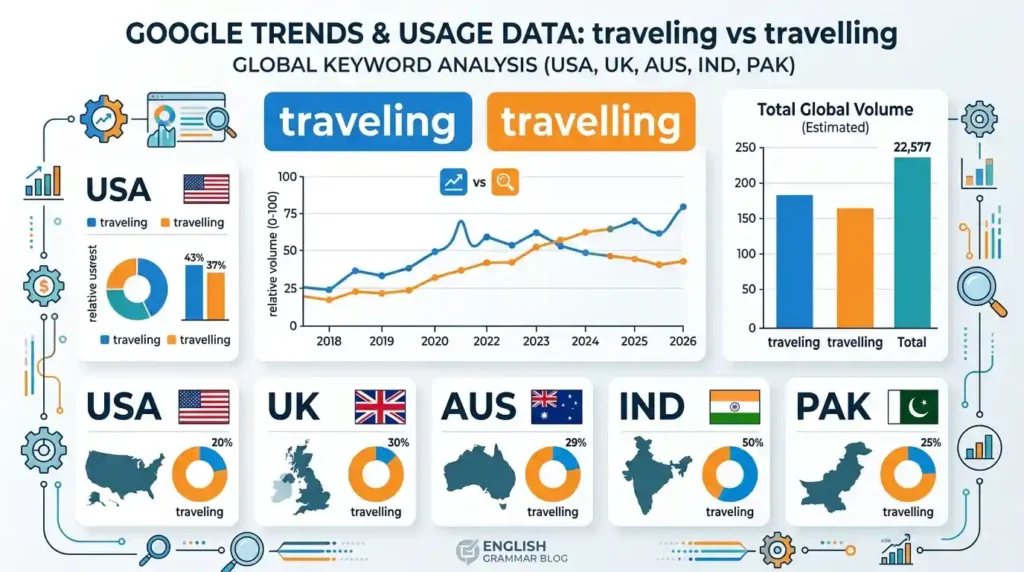
Search data shows “traveling” leads clearly in the USA, matching American spelling habits. The UK, Australia, and India favor “travelling,” following British English rules. Pakistan shows a strong preference for “travelling” too, due to British-influenced education systems. This regional split makes spelling choice essential for global SEO content.
Comparison Table: Keyword Variations
| Keyword Variation | Common Region | Search Intent |
|---|---|---|
| Traveling or travelling | Global | Spelling confusion |
| Travelling vs traveling | UK, India, Pakistan | Usage clarification |
| American spelling traveling | USA, Canada | Style guide check |
| British spelling travelling | UK, Australia | Style guide check |
| Traveling meaning | USA | Definition lookup |
FAQ’s Section
1. Is “traveling” or “travelling” correct? Both are correct. “Traveling” is American, and “travelling” is British.
2. What is the difference between traveling and travelling? Only the spelling differs, based on American versus British English rules.
3. Which word is more common: traveling or travelling? “Traveling” is more common in the USA. “Travelling” is more common elsewhere.
4. Can I use either spelling in formal writing? Yes, but stay consistent with one spelling throughout your document.
5. Why does this confusion exist? American and British English follow different rules for doubling consonants.
Conclusion
Traveling or travelling does not need to confuse you anymore. Both spellings mean the same thing and are equally correct. “Traveling” fits American English writing style. “Travelling” fits British English writing style. Remember the simple trick: one “l” for American, two “l”s for British. Choose based on your audience and stay consistent. This small detail can make your writing look more polished and professional. Keep this guide handy for your next travel blog, email, or article.

Daniel Foster is a comparison analyst and content strategist at Comparelly.com. He specializes in researching products, services, tools, and industry trends to create clear, unbiased comparison guides. With a focus on accuracy and practical insights, Daniel helps readers understand key differences and make informed decisions with confidence. His goal is to simplify complex choices through trustworthy, easy-to-understand content.