Allergies or sinus infection can cause many of the same nose and sinus symptoms. This makes them easy to confuse. Both can cause congestion, a runny nose, drainage, and sinus pressure. However, their causes are different. Allergies happen when the immune system reacts to allergens such as pollen, dust mites, or pet dander. A sinus infection, also called sinusitis, involves inflammation and swelling inside the sinuses. Viruses cause many sinus infections, while bacteria cause some cases.
Itchy eyes and repeated sneezing often point toward allergies. Facial pain, pressure, fever, or symptoms that worsen after improving can suggest sinusitis. However, symptoms alone cannot always identify the cause. This guide explains the main differences between allergies and sinus infections. It also covers symptoms, timing, common mistakes, treatment basics, and when to seek medical care.
Health note: This article provides general information. It cannot diagnose a medical condition. A healthcare professional can assess persistent, severe, or concerning symptoms.
⭐ Quick Answer (for Google snippet)
Allergies usually cause itching, sneezing, watery eyes, and a runny or stuffy nose. Sinus infections more often cause facial pressure, pain, thick drainage, and sometimes fever.
Example:
- Itchy, watery eyes after pollen exposure → Allergies may be more likely.
- Facial pressure with symptoms lasting over 10 days → Sinusitis may need evaluation.
📖 Meaning of Allergies
Allergies happen when the immune system reacts to a substance that is usually harmless. These substances are called allergens. Common examples include pollen, dust mites, and pet dander.
Allergic rhinitis can affect the nose, throat, and eyes. Common symptoms include sneezing, itching, congestion, and watery eyes.
Examples of Allergies
- Sarah gets sneezing and itchy eyes every spring.
- David develops congestion after visiting a home with cats.
Allergy symptoms can continue while the person remains exposed to the trigger.
📘 Meaning of Sinus Infection
A sinus infection is commonly called sinusitis. It occurs when the sinus tissues become inflamed or swollen. Mucus can build up when normal drainage becomes blocked.
Many acute sinus infections begin after viral respiratory infections. Some cases involve bacteria.
Examples of Sinus Infection
- Mark develops facial pressure after a long-lasting cold.
- Lisa has congestion, headache, and sinus pressure that does not improve.
Symptoms can vary depending on the cause and duration.
📊 Key Differences: Allergies or Sinus Infection
| Feature | Allergies | Sinus Infection |
|---|---|---|
| Main cause | Immune reaction to allergens | Usually viral inflammation; some cases are bacterial |
| Common symptoms | Sneezing, itching, watery eyes, congestion | Congestion, facial pressure, headache, drainage |
| Itchy eyes | Common | Less typical |
| Facial pressure | Can occur | Common |
| Fever | Usually absent | Can occur |
| Trigger | Pollen, dust, pets, and other allergens | Often follows a respiratory infection |
| Duration | Can continue with allergen exposure | Acute cases often improve within days to weeks |
| Contagious | No | Viral cases can involve contagious viruses |
| Treatment approach | Trigger avoidance and allergy medicines may help | Self-care is common; some bacterial cases need medical treatment |
Symptoms overlap, so this table should not replace a medical evaluation.
📜 Origin & History of Allergies and Sinus Infection
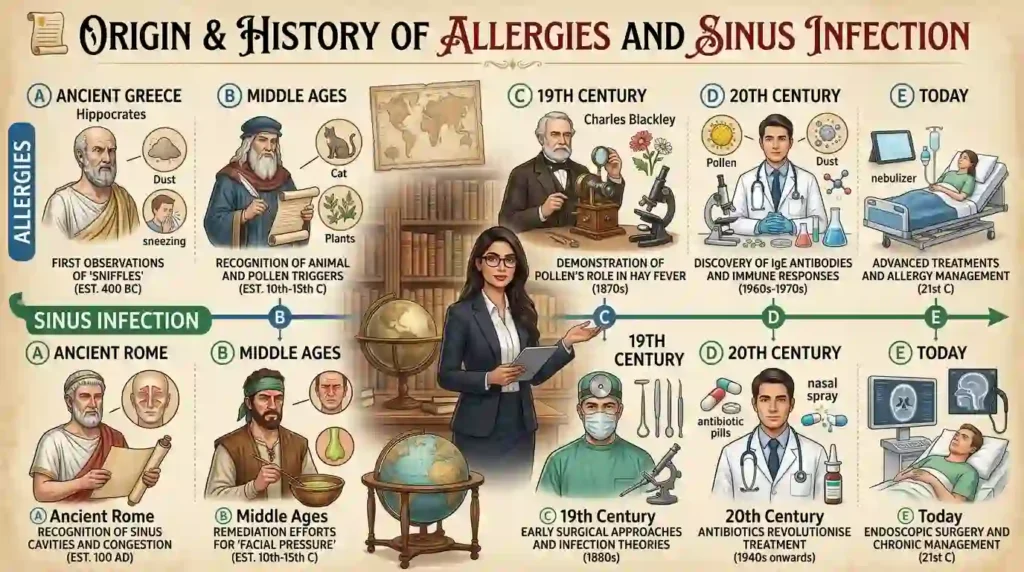
The word allergy describes an unusual or altered immune response. Modern medicine uses the term for reactions to substances called allergens.
Sinusitis combines the idea of the sinuses with inflammation. Modern medical usage describes inflammation of the tissues lining the sinuses.
The terms also connect with several related health words.
Similar Medical Terms
- Allergic rhinitis
- Hay fever
- Sinusitis
- Rhinosinusitis
- Nasal congestion
- Postnasal drip
- Sinus pressure
Allergic rhinitis refers to allergy-related inflammation inside the nose. Rhinosinusitis refers to inflammation involving the nose and sinuses.
🇬🇧 British English vs American English Spelling
Allergies and sinus infection have the same spelling in British and American English. The main difference may involve related medical vocabulary. Sinusitis is also spelled the same in both varieties.
British vs American English Comparison
| Term | 🇬🇧 British English | 🇺🇸 American English |
|---|---|---|
| Allergies | allergies | allergies |
| Allergy | allergy | allergy |
| Sinus infection | sinus infection | sinus infection |
| Sinusitis | sinusitis | sinusitis |
| Allergic rhinitis | allergic rhinitis | allergic rhinitis |
| Symptoms | symptoms | symptoms |
There is no major British-American spelling difference for the main keyword.
🤧 When to Consider Allergies
Allergies become more likely when symptoms follow a known trigger.
Common clues include:
- Frequent sneezing
- Itchy nose
- Itchy throat
- Itchy eyes
- Watery eyes
- Runny nose
- Nasal congestion
- Symptoms that return during certain seasons
Allergic rhinitis often appears after exposure to pollen, pets, or other allergens.
Example
You visit a house with cats and quickly develop sneezing and itchy eyes.
That pattern can fit an allergic reaction.
However, only a healthcare professional can determine the cause when symptoms remain unclear.
🦠 When to Consider a Sinus Infection
A sinus infection may become more likely when you have:
- Facial pressure
- Facial pain
- Nasal congestion
- Headache
- Thick nasal drainage
- Postnasal drip
- Reduced sense of smell
- Fever
- Symptoms that worsen after initial improvement
Many sinus infections are caused by viruses and improve without antibiotics.
Example
You develop congestion after a cold. Facial pressure continues and your symptoms become worse after improving.
That pattern deserves medical attention, especially if symptoms persist.
❌ Common Mistakes About Allergies or Sinus Infection
Mistake 1: Assuming Every Stuffy Nose Is an Infection
❌ Incorrect: “I have congestion, so I must have a sinus infection.”
✅ Better: Congestion can occur with allergies, colds, and sinusitis.
Several conditions can cause similar nasal symptoms.
Mistake 2: Using Mucus Color as the Only Test
❌ Incorrect: “Green mucus always means I need antibiotics.”
✅ Better: Mucus color alone cannot determine the cause.
Mayo Clinic specifically notes that mucus color does not reliably separate allergies from sinus infections.
Mistake 3: Assuming Allergies and Sinusitis Are the Same
❌ Incorrect: “Allergies and sinus infections are the same condition.”
✅ Correct: They are different conditions.
Allergies involve an immune reaction to allergens. Sinusitis involves inflammation of the sinuses.
Mistake 4: Assuming Antibiotics Treat Every Sinus Infection
❌ Incorrect: “Every sinus infection requires antibiotics.”
✅ Correct: Many sinus infections improve without antibiotics.
Viruses cause many sinus infections. Antibiotics do not treat viral infections.
Mistake 5: Ignoring Symptoms That Become Severe
❌ Incorrect: “I should always wait for symptoms to disappear.”
✅ Better: Seek medical advice for severe or concerning symptoms.
The CDC recommends medical evaluation for severe symptoms, worsening symptoms, or symptoms lasting more than 10 days without improvement.
🧠 Easy Trick to Remember Allergies or Sinus Infection
Use the ITCH vs PRESSURE trick.
🌼 Allergies = ITCH
Think about:
- Itchy eyes
- Itchy nose
- Sneezing
- Watery eyes
🦠 Sinus Infection = PRESSURE
Think about:
- Facial pressure
- Facial pain
- Congestion
- Headache
- Persistent symptoms
This trick can help you notice patterns.
However, symptoms can overlap. It should not replace medical advice.
🌍 Everyday Life Examples of Allergies or Sinus Infection
1. 🌸 Spring Pollen
You spend time outdoors during high pollen periods.
You begin sneezing and develop itchy, watery eyes.
This pattern can fit allergies.
The keyword variation sinus infection may still appear in searches because congestion can occur with both conditions.
2. 🐱 Visiting a Pet Owner
You visit a home with several cats.
Soon after, your nose becomes itchy and you start sneezing.
That pattern may suggest an allergy.
Pet dander is a known allergen.
3. 🤒 After a Cold
You recover from a cold but continue having congestion.
You then develop facial pressure and worsening symptoms.
A sinus infection may need consideration.
Persistent or worsening symptoms should be discussed with a healthcare professional.
4. 🏠 Dust Exposure
You clean a dusty room.
You quickly develop sneezing, congestion, and itchy eyes.
This pattern may fit allergies.
Dust mites are among common allergy triggers.
5. 😣 Facial Pressure
You have a blocked nose with pressure around your cheeks and forehead.
The symptoms continue instead of improving.
This pattern can occur with sinusitis.
Sinusitis commonly causes facial pressure and nasal congestion.
💡 Other Clues That May Help
Symptoms can provide useful clues, but no single symptom proves the cause.
Itching
Itching of the eyes, nose, or throat is common with allergies. It is less typical of sinus infections.
Fever
Fever can occur with infections but is not typical of seasonal allergies.
Timing
Allergies may appear during certain seasons or after specific exposures.
Sinus infections may follow colds or other respiratory infections.
Duration
Allergy symptoms can continue while the allergen remains present.
Acute sinusitis often improves within days or weeks.
🔑 Related Keywords
Use these related keywords to support topical SEO:
- allergies or sinus infection symptoms
- sinus infection or allergies
- allergy vs sinus infection
- how to tell allergies from sinus infection
- allergy symptoms vs sinus infection
- sinus infection symptoms
- allergy symptoms
🏁 Final Verdict: Allergies or Sinus Infection?
Neither condition is automatically “better” or worse.
The important question is which condition matches the symptoms and cause.
Allergies may fit when:
- Symptoms follow allergens.
- Sneezing is frequent.
- Eyes or nose feel itchy.
- Eyes become watery.
- Symptoms return during certain seasons.
Sinus infection may fit when:
- Facial pressure is prominent.
- Symptoms follow a respiratory infection.
- Symptoms persist without improvement.
- Symptoms worsen after initially improving.
- Fever or significant facial pain occurs.
These patterns are clues, not a diagnosis. Healthcare professionals can evaluate symptoms and determine the appropriate treatment.
📈 Google Trends & Search Usage Data: Allergies or Sinus Infection

Google Trends results depend on the selected country, date range, category, and search term. Therefore, there is no single permanent numerical value for these keywords.
- 🇺🇸 USA: Both terms have strong health-search intent, with users often comparing allergy and sinus symptoms.
- 🇬🇧 UK: Searchers commonly use both allergy-related and sinusitis-related wording.
- 🇦🇺 Australia: Seasonal allergy searches can rise during relevant pollen periods.
- 🇮🇳 India: Users commonly search symptom-based comparisons involving allergies, congestion, and sinus problems.
- 🇵🇰 Pakistan: Search intent often centers on identifying the cause of congestion, headaches, and nasal symptoms.
💡 SEO Insight
The keyword allergies or sinus infection has strong comparison intent. Users usually want symptom-based guidance rather than a simple definition. A useful article should compare itching, sneezing, facial pressure, fever, timing, and duration. It should also explain when professional medical care may be needed.
📊 Keyword Variations Comparison
| Keyword Variation | Search Intent | Main Topic |
|---|---|---|
| allergies or sinus infection | Comparison | Identify possible cause |
| sinus infection or allergies | Comparison | Compare symptoms |
| allergy vs sinus infection | Comparison | Key differences |
| allergies vs sinusitis | Comparison | Medical terminology |
| sinus infection symptoms | Informational | Sinusitis symptoms |
| allergy symptoms | Informational | Allergy symptoms |
| how to tell allergies from sinus infection | Problem-solving | Symptom comparison |
❓ FAQ: Allergies or Sinus Infection
1. Is it allergies or a sinus infection?
Both can cause congestion and drainage. Itching and watery eyes often suggest allergies. Facial pressure and persistent symptoms may suggest sinusitis.
2. What is the difference between allergies and a sinus infection?
Allergies involve an immune response to allergens. Sinusitis involves inflammation and swelling in the sinuses.
3. Which is more common, allergies or sinus infection?
Both conditions are common. Their frequency varies by population, age, season, and other factors. They also can occur together.
4. Is there a formal medical term for a sinus infection?
Yes. Healthcare professionals commonly use sinusitis or rhinosinusitis. The term refers to inflammation involving the sinuses.
5. Why do allergies and sinus infections cause confusion?
They share several symptoms. Both can cause congestion, runny nose, drainage, headache, and sinus pressure. This overlap can make them difficult to distinguish without considering the full symptom pattern.
🚨 When Should You See a Doctor?
Consider contacting a healthcare professional when symptoms are severe, persistent, or worsening.
The CDC recommends medical evaluation when:
- Symptoms are severe.
- Symptoms worsen after improving.
- Symptoms last more than 10 days without getting better.
- Fever lasts longer than three to four days.
- You experience repeated sinus infections.
Seek urgent medical attention for severe or concerning symptoms, especially trouble breathing, serious swelling, or severe pain.
📝 Conclusion
Knowing the difference between allergies or sinus infection can help you understand your symptoms. Allergies usually result from an immune reaction to allergens. They often cause sneezing, itching, congestion, and watery eyes. Sinus infections involve inflammation and swelling inside the sinuses. They can cause congestion, facial pressure, headache, and drainage. Many sinus infections start with viruses and improve without antibiotics.
Symptoms can overlap, so no single sign gives a definite answer. It is also important to avoid using mucus color alone as a diagnosis. Pay attention to triggers, timing, symptom changes, and duration. If symptoms become severe, worsen, or last longer than expected, contact a healthcare professional. Good symptom awareness can help you choose the right next step.

Daniel Foster is a comparison analyst and content strategist at Comparelly.com. He specializes in researching products, services, tools, and industry trends to create clear, unbiased comparison guides. With a focus on accuracy and practical insights, Daniel helps readers understand key differences and make informed decisions with confidence. His goal is to simplify complex choices through trustworthy, easy-to-understand content.