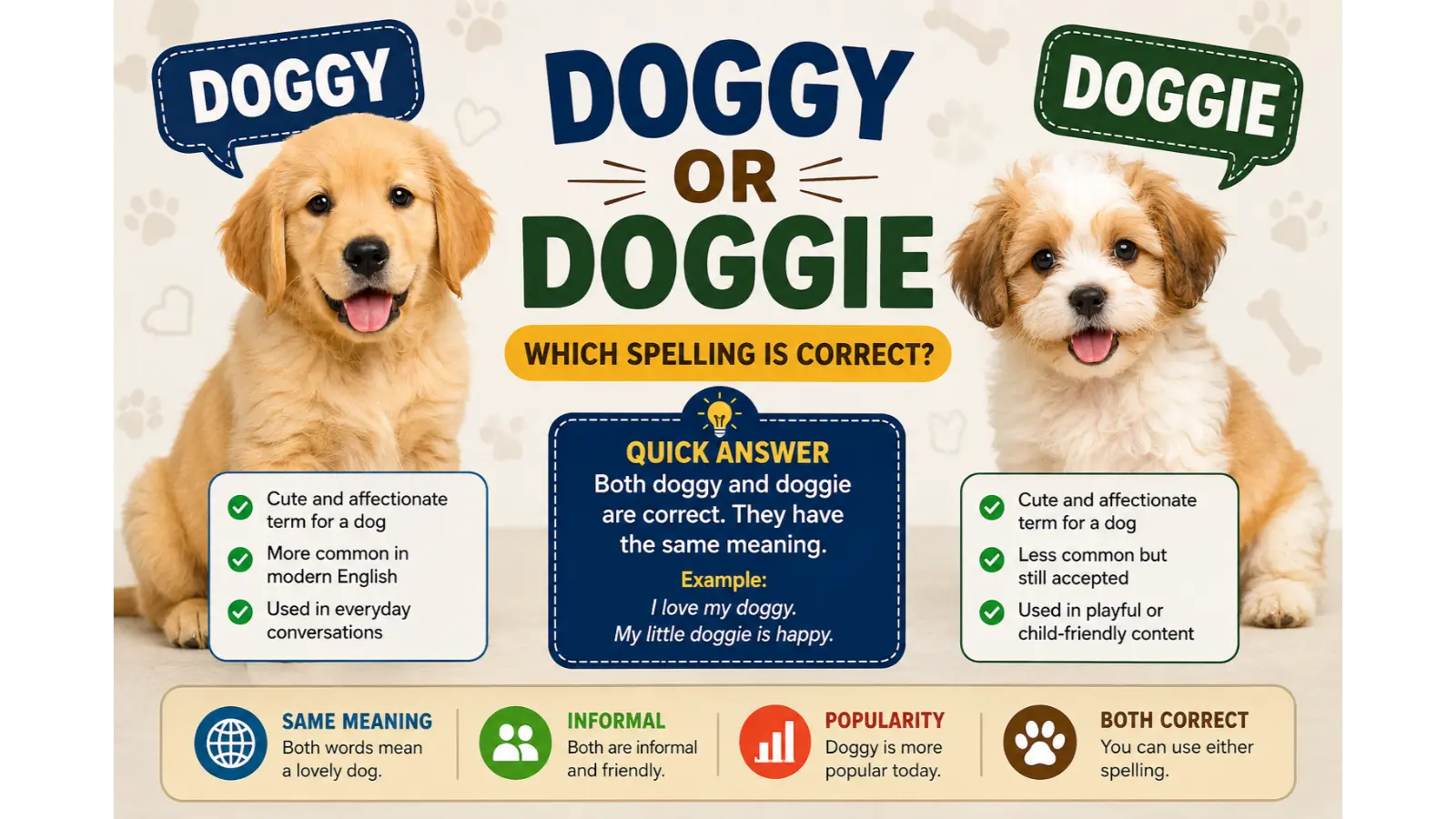
Doggy Or Doggie is a common spelling question that confuses many English speakers. Both words refer to a dog, especially in a cute, friendly, or affectionate way. However, people often wonder which spelling is more correct and which one they should use in writing.
The confusion exists because both spellings appear in books, websites, advertisements, and everyday conversations. While they have the same meaning, their popularity and usage can vary depending on region, style, and personal preference. This guide explains the difference between doggy and doggie, when to use each one, and which spelling is more common today.
Quick Answer (for Google Snippet)
Doggy and doggie both mean a small, cute, or beloved dog. The two spellings have the same meaning, but doggy is generally more common in modern English.
Example:
✔ I took my doggy for a walk.
✔ My little doggie loves playing fetch.
Meaning of Doggy
Doggy is an informal and affectionate word for a dog. It is commonly used when talking to children or expressing affection for a pet.
Examples
- My doggy waits for me at the door.
- The little doggy loves chasing balls.
Meaning of Doggie
Doggie is also an informal and affectionate term for a dog. It carries the same meaning as doggy.
Examples
- That doggie looks very friendly.
- Her doggie enjoys sleeping on the couch.
Key Differences Between Doggy and Doggie
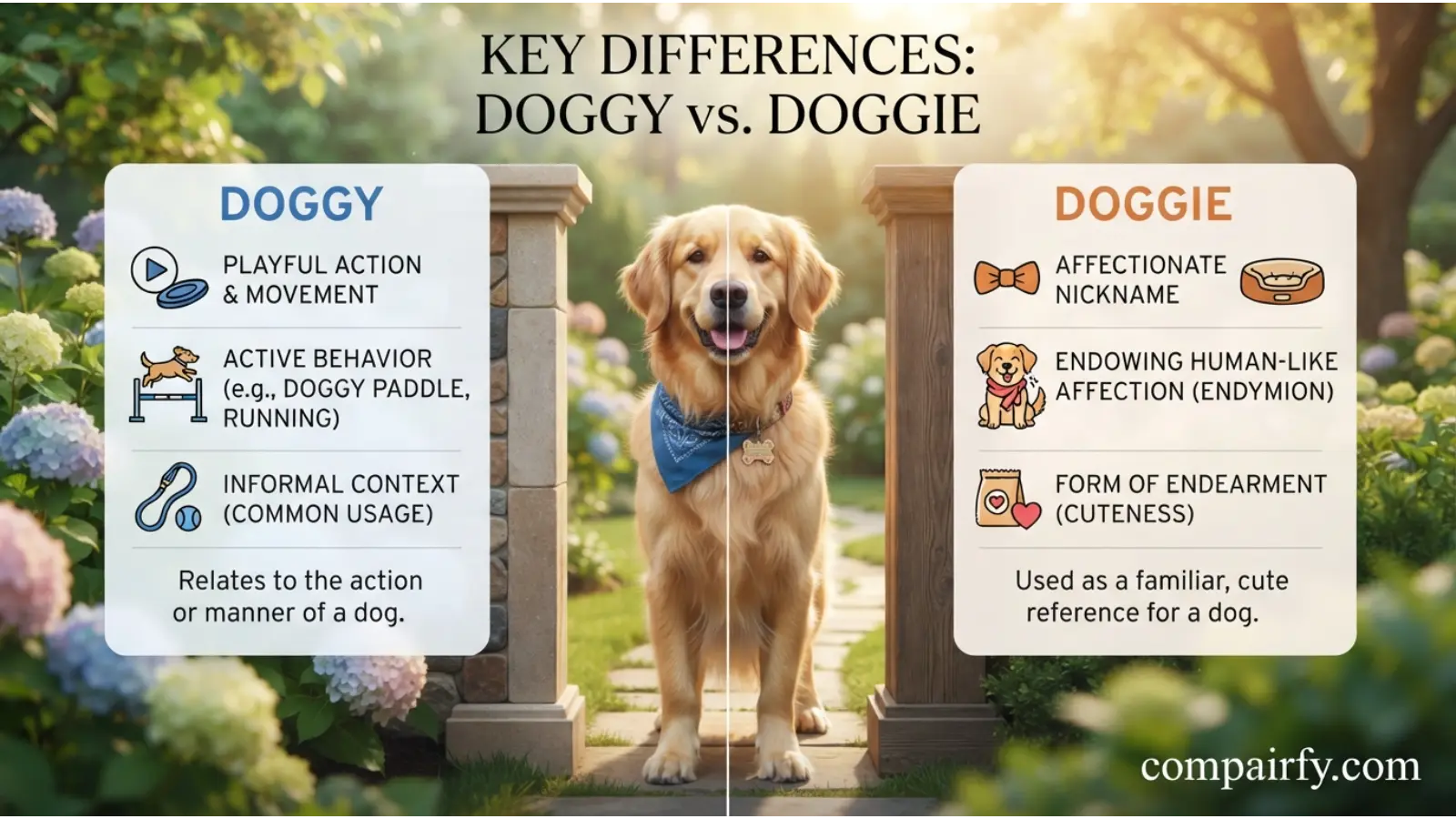
| Feature | Doggy | Doggie |
|---|---|---|
| Meaning | Cute or affectionate term for a dog | Cute or affectionate term for a dog |
| Tone | Informal and friendly | Informal and friendly |
| Usage | More common today | Less common but accepted |
| Popularity | Higher | Lower |
| Correctness | Correct | Correct |
Origin & History
Both doggy and doggie developed as affectionate forms of the word dog. English often adds endings like -y and -ie to make words sound friendlier or more playful.
Similar examples include:
- Bird → Birdie
- Pig → Piggy
- Duck → Ducky
- Horse → Horsie
Over time, both spellings became accepted in everyday English.
British English vs American English Spelling
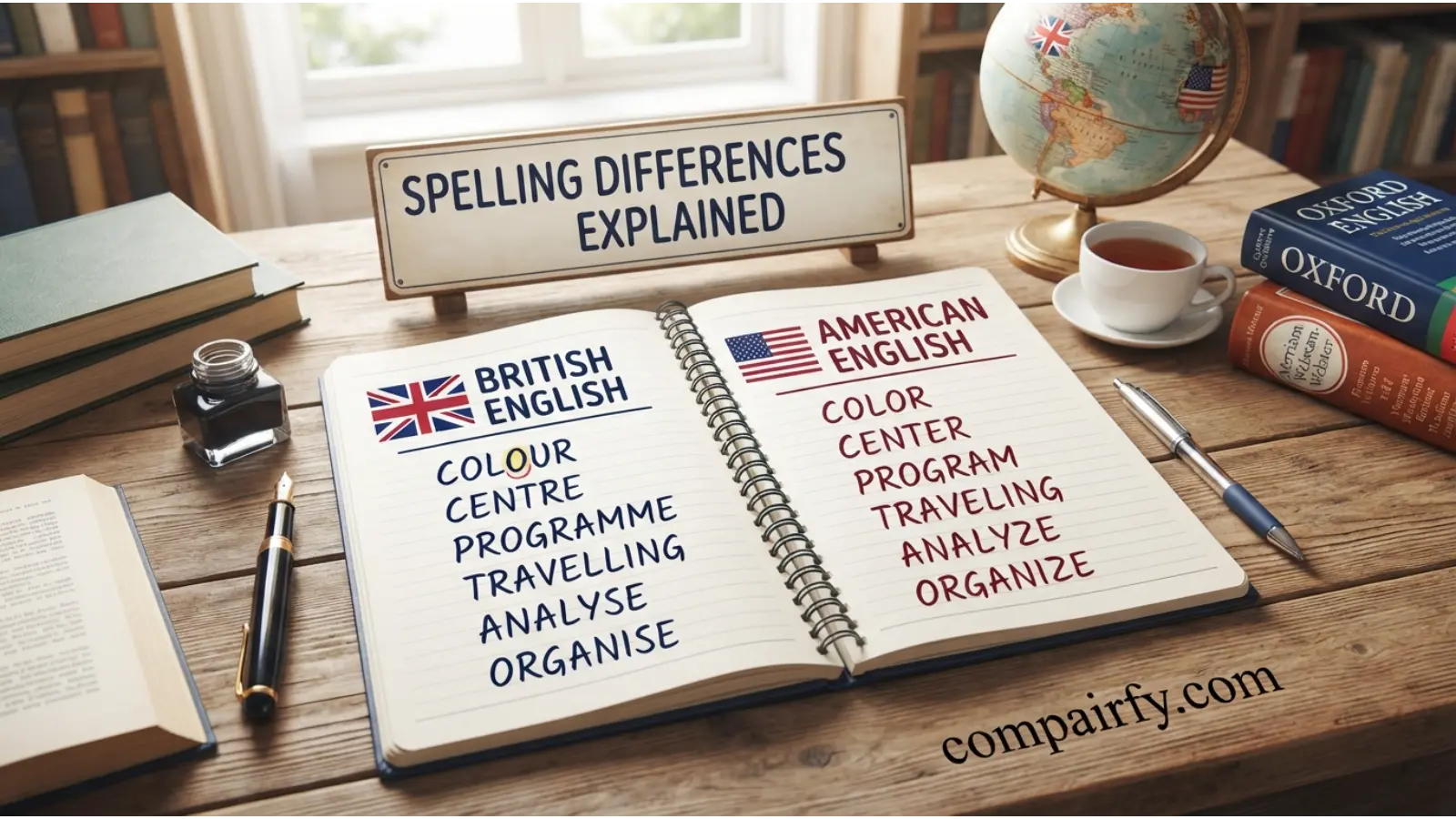
Neither spelling is exclusively British or American. Both are understood in English-speaking countries. However, doggy tends to appear more often in modern publications and online content.
Comparison Table: British vs American English
| Feature | British English | American English |
|---|---|---|
| Doggy | Common | Very Common |
| Doggie | Common | Common |
| Preference | Slightly mixed | Often favors doggy |
| Meaning | Same | Same |
When to Use Doggy
Use doggy when:
- Writing casual content.
- Talking to children.
- Referring to pets affectionately.
- Creating pet-related marketing content.
Examples
- My doggy loves treats.
- We adopted a rescue doggy last month.
- That doggy looks adorable.
When to Use Doggie
Use doggie when:
- Following a style guide that prefers it.
- Writing playful or child-focused content.
- Using traditional or personal spelling preferences.
Examples
- The doggie wagged its tail.
- Our doggie enjoys swimming.
- Every doggie needs exercise.
Common Mistakes
Mistake 1
❌ Doggy and doggie have different meanings.
✔ Doggy and doggie have the same meaning.
Mistake 2
❌ Doggie is incorrect.
✔ Doggie is a correct spelling.
Mistake 3
❌ Doggy is only American English.
✔ Doggy is used in many English-speaking countries.
Mistake 4
❌ Doggie is only British English.
✔ Doggie appears in both British and American English.
Easy Trick to Remember
Think of doggy as following the pattern of piggy and buggy, which are very common spellings.
If you are unsure, choose doggy because it is generally more popular in modern usage.
Write 5 Examples
Example 1: Talking to a Child
“My doggy wants to play outside.”
“My doggie is waiting in the yard.”
Example 2: Social Media Caption
“Look at my happy doggy today.”
“My cute doggie enjoyed the beach.”
Example 3: Pet Store Advertisement
“Find the best toys for your doggy.”
“Healthy snacks for every doggie.”
Example 4: Family Conversation
“Our doggy loves car rides.”
“The doggie slept all afternoon.”
Example 5: Veterinary Visit
“The doggy is healthy and active.”
“Your doggie is recovering well.”
Related Keywords
- doggy meaning
- doggie meaning
- doggy vs doggie
- doggie or doggy
- doggy spelling
- doggie spelling
- correct spelling of doggy
Google Trends & Usage Data
Across the USA, UK, Australia, India, and Pakistan, searches show that doggy generally receives more attention than doggie. The difference is strongest in the United States and Australia.
In the UK, both spellings appear regularly. India and Pakistan also show a preference for doggy, especially in online searches and social media content.
Comparison Table: Keyword Variations
| Keyword Variation | Relative Popularity |
|---|---|
| Doggy | Very High |
| Doggie | High |
| Doggy Meaning | Medium |
| Doggie Meaning | Medium |
| Doggy vs Doggie | Growing |
| Doggie or Doggy | Growing |
Final Verdict
Both doggy and doggie are correct spellings. They share the same meaning and can usually be used interchangeably.
If you want the most widely used modern spelling, choose doggy. If you prefer a traditional or personal style, doggie is also perfectly acceptable.
FAQs:
Is doggy or doggie correct?
Both spellings are correct and accepted in English.
What is the difference between doggy and doggie?
There is no difference in meaning. The main difference is spelling preference.
Which is more common, doggy or doggie?
Doggy is generally more common in modern usage.
Which spelling is better for formal writing?
Neither is very formal. Use “dog” in formal writing instead.
Why does the confusion exist?
The confusion exists because both spellings developed as accepted affectionate forms of the word “dog.”
Conclusion
Doggy Or Doggie is a spelling variation rather than a meaning difference. Both words describe a dog in a friendly, affectionate, and informal way. English has many similar word pairs that use -y and -ie endings, which is why both forms exist today.
For most modern writing, doggy is the more common choice and is often preferred in online content. However, doggie remains correct and widely understood. The best option depends on your audience and style preference. If consistency matters, choose one spelling and use it throughout your content. In everyday conversation, both words sound natural and friendly.

Daniel Foster is a comparison analyst and content strategist at Comparelly.com. He specializes in researching products, services, tools, and industry trends to create clear, unbiased comparison guides. With a focus on accuracy and practical insights, Daniel helps readers understand key differences and make informed decisions with confidence. His goal is to simplify complex choices through trustworthy, easy-to-understand content.