Were or We’re is a common grammar confusion because the two words sound the same but have different meanings. Many writers mix them up in emails, schoolwork, social media posts, and daily conversations. Learning the difference is easy once you understand how each word works in a sentence.
This guide explains the meaning, usage, examples, history, common mistakes, and simple memory tricks for Were or We’re. By the end, you will know exactly when to use each word and avoid one of the most common English writing mistakes.
Quick Answer
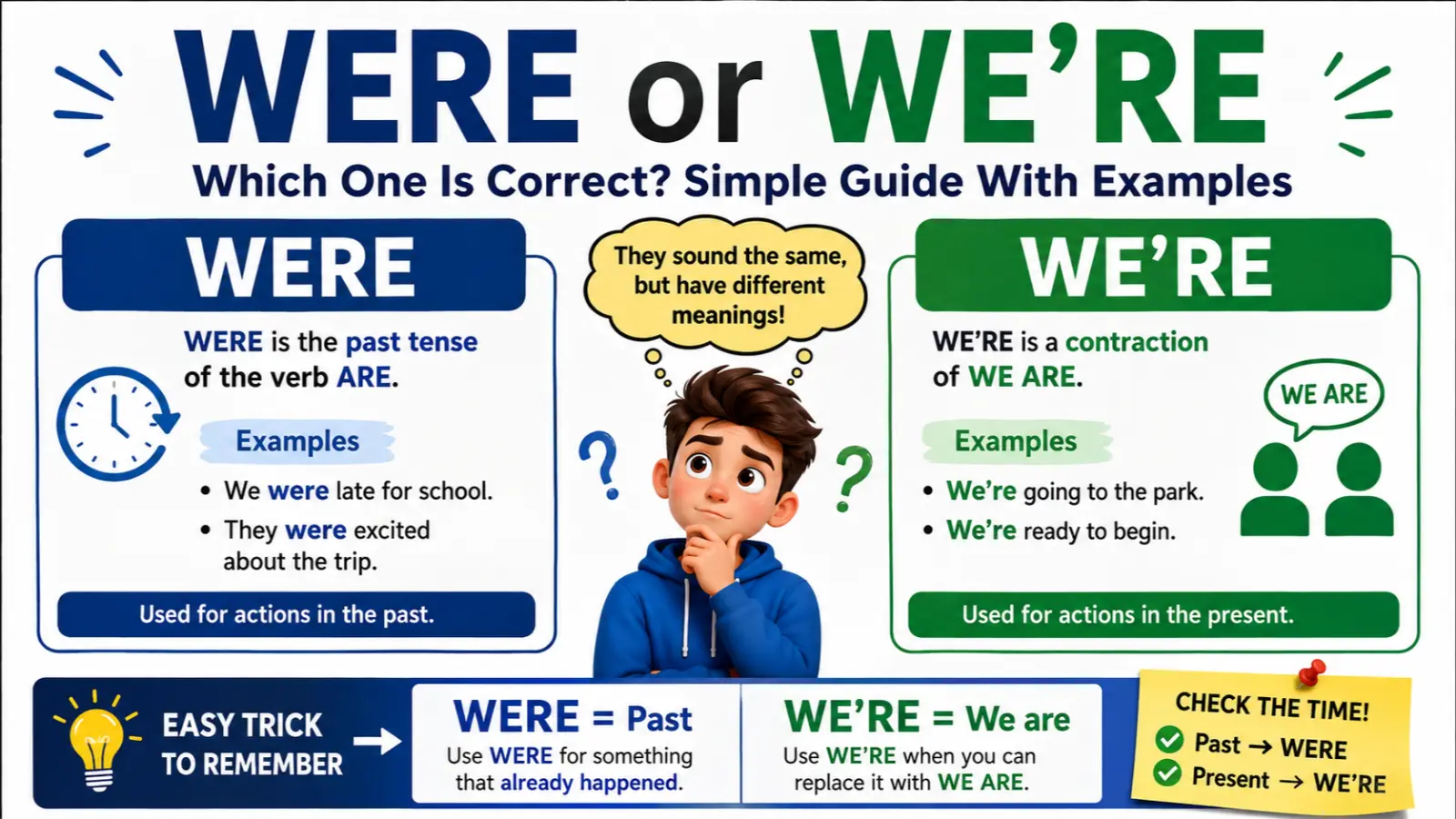
“Were” is the past tense of “are.”
“We’re” is the short form (contraction) of “we are.”
Examples
- We were happy yesterday. ✅
- We’re happy today. ✅
Meaning of Were
Were is the past tense form of the verb to be. It describes something that happened in the past.
Examples
- We were late for school.
- They were excited about the trip.
Meaning of We’re
We’re is a contraction of we are. The apostrophe replaces the letter a in are.
Examples
- We’re going to the park.
- We’re ready to begin.
Key Differences Between Were and We’re
| Feature | Were | We’re |
|---|---|---|
| Meaning | Past tense of “are” | Short form of “we are” |
| Part of Speech | Verb | Contraction |
| Time | Past | Present |
| Tone | Formal and informal | Mostly informal but accepted in everyday writing |
| Usage | Describes past events | Describes present actions or states |
| Popularity | Very common | Very common |
Origin and History
The word were comes from Old English wǣron, which was used as the past tense of be.
We’re appeared much later after English contractions became common in everyday writing and speech.
Similar Word Examples
- They’re = They are
- We’re = We are
- You’re = You are
- It’s = It is
British English vs American English
There is no spelling difference between British English and American English for were and we’re.
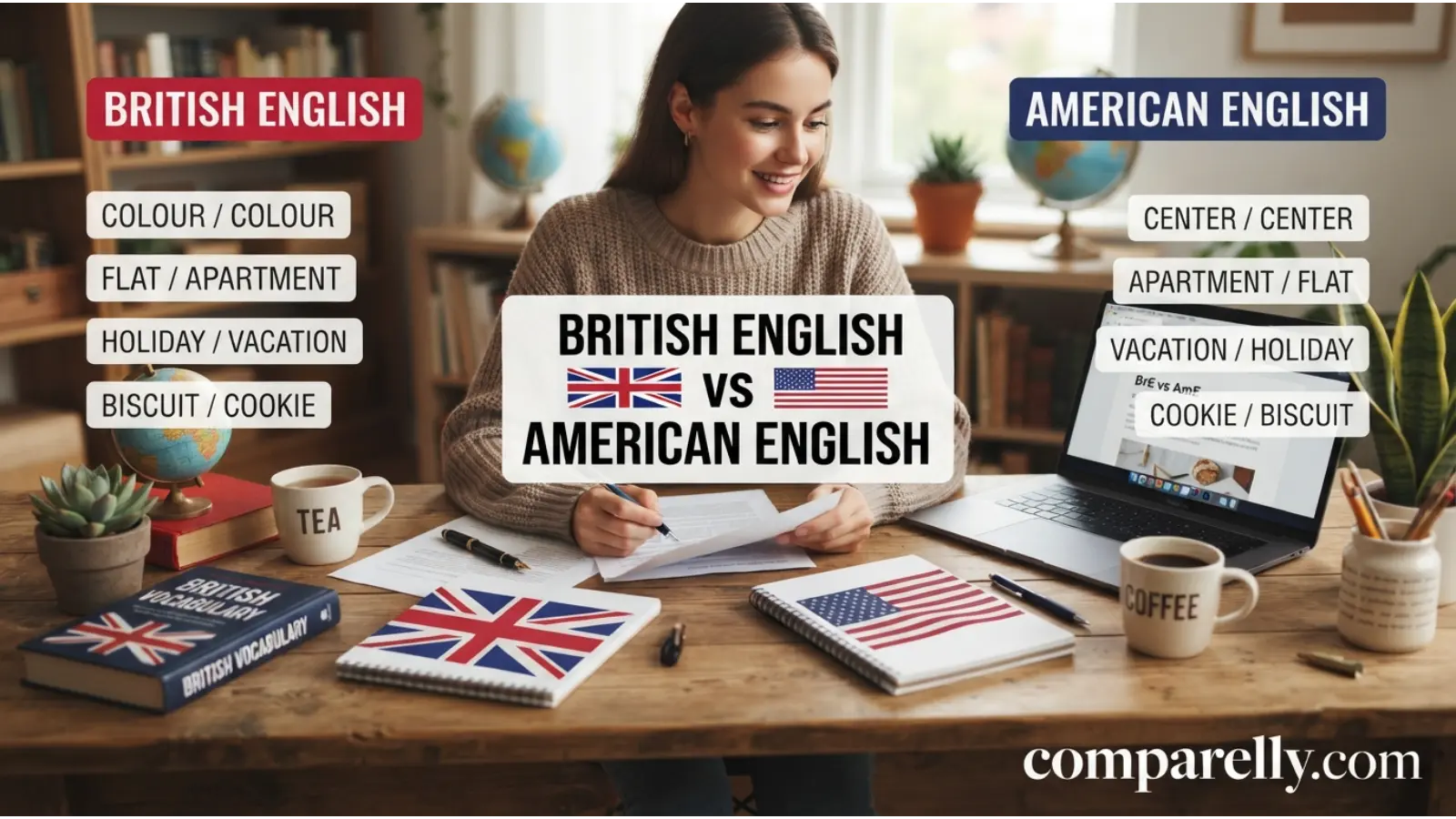
Both countries use the same spellings, meanings, and grammar rules. Only pronunciation may differ slightly because of regional accents.
Comparison Table
| British English | American English |
|---|---|
| Were | Were |
| We’re | We’re |
| Same meaning | Same meaning |
| Same grammar | Same grammar |
When to Use Were
Use were when talking about something in the past.
Examples
- We were best friends.
- They were waiting outside.
- The children were tired.
- You were correct.
When to Use We’re
Use we’re when you mean we are.
Examples
- We’re watching a movie.
- We’re learning English.
- We’re almost home.
- We’re excited for the weekend.
Common Mistakes

Incorrect
We’re happy yesterday.
Correct
We were happy yesterday
Incorrect
Were going shopping now.
Correct
We’re going shopping now.
Incorrect
We’re at school yesterday.
Correct
We were at school yesterday.
Incorrect
Were ready to leave.
Correct
We’re ready to leave.
Easy Trick to Remember
Think of this simple rule:
- We’re = We are
- If you can replace it with we are, use we’re.
- If the sentence talks about the past, use were.
Example
“We’re leaving now.”
They are leaving now.” ✔
We were leaving yesterday.”
We are leaving yesterday.” ✘
Write 5 Examples
1. At School
- We were in science class yesterday.
- We’re studying math today.
2. At Work
- We were busy all morning.
- We’re preparing the report now.
3. Traveling
- We were in London last week.
- We’re flying to Paris tomorrow.
4. At Home
- We were watching TV.
- We’re cooking dinner.
5. With Friends
- We were classmates.
- We’re still good friends.
Related Keywords
- were vs we’re
- were meaning
- we’re meaning
- were or we’re grammar
- when to use were
- when to use we’re
- were and we’re examples
Final Verdict
Neither word is better than the other because both are correct in different situations.
- Use were for past events.
- Use we’re when you mean we are in the present.
Choosing the correct word depends entirely on the sentence.
Google Trends and Usage Data
Search interest for Were or We’re remains strong because learners often confuse these two words. The keyword is popular in countries where English is a primary language and in countries where English is widely taught. Students, teachers, and professionals frequently search for grammar comparisons.
Country Insights
| Country | Usage Insight |
|---|---|
| USA | Very high search volume among students and writers |
| UK | Frequently searched for grammar learning |
| Australia | Strong educational search interest |
| India | High demand from English learners |
| Pakistan | Popular among students and competitive exam preparation |
Keyword Variations Comparison
| Keyword Variation | Search Intent |
|---|---|
| were or we’re | Grammar comparison |
| were vs we’re | Usage comparison |
| difference between were and we’re | Educational |
| when to use were | Grammar help |
| when to use we’re | Grammar help |
| were meaning | Definition |
| we’re meaning | Definition |
Frequently Asked Questions
1. Is it correct to write “we’re” instead of “were”?
No. Use we’re only when you mean we are.
2. What is the difference between were and we’re?
Were is the past tense of are, while we’re means we are.
3. Which is more common?
Both words are very common. Their use depends on the sentence.
4. Can “we’re” be used in formal writing?
Yes. However, many formal documents prefer the full form we are instead of the contraction.
5. Why do people confuse were and we’re?
They sound almost identical when spoken, but they have different meanings and grammar rules.
Conclusion
Were or We’re is one of the easiest grammar differences to master once you know the rule. Were always refers to the past, while we’re is simply the shortened form of we are. Checking the time of the action is the quickest way to choose the correct word. If replacing we’re with we are makes sense, the contraction is correct. If the sentence talks about something that already happened, were is the right choice. Practicing with real-life examples will help you remember the difference and improve your writing. Using the correct form makes your communication clearer, more professional, and easier for readers to understand.

Daniel Foster is a comparison analyst and content strategist at Comparelly.com. He specializes in researching products, services, tools, and industry trends to create clear, unbiased comparison guides. With a focus on accuracy and practical insights, Daniel helps readers understand key differences and make informed decisions with confidence. His goal is to simplify complex choices through trustworthy, easy-to-understand content.