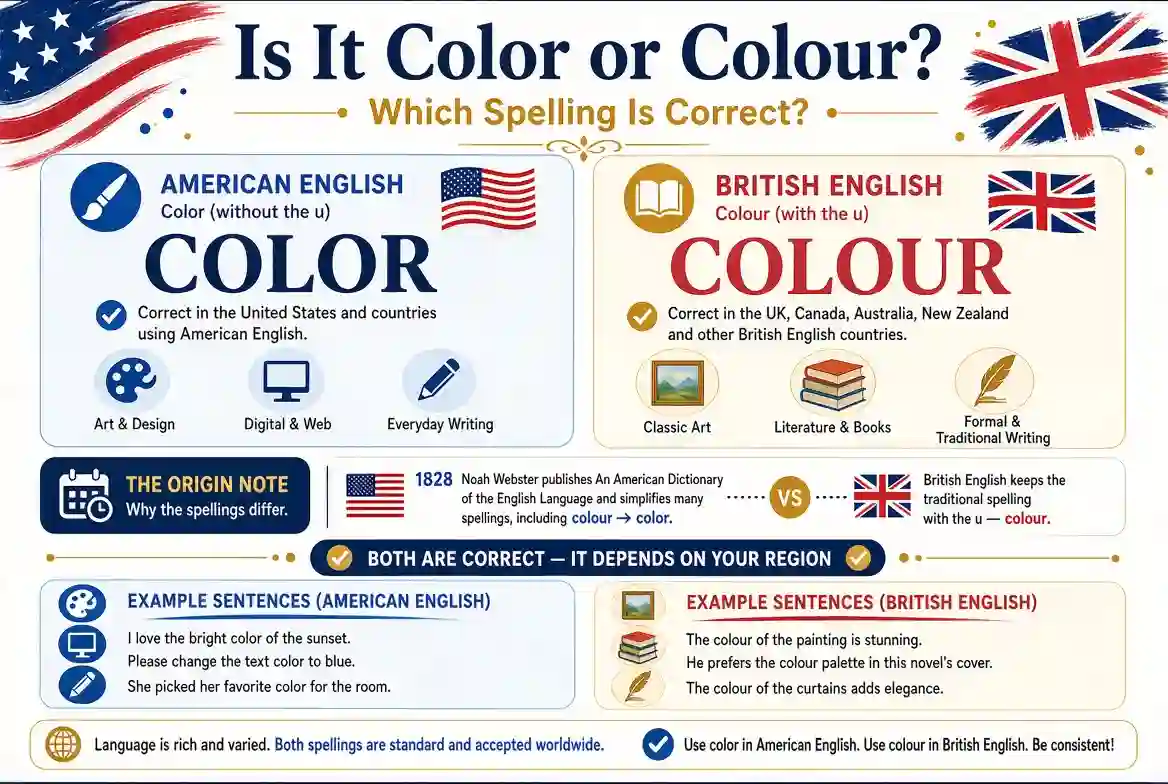
Is it color or colour? Both spellings are correct, but they belong to different forms of English. Color is the standard spelling in American English. Colour is the standard spelling in British English and several other English-speaking countries.
The difference comes from regional spelling traditions, not from meaning. Both words describe the appearance of something based on how it reflects or absorbs light. You can use either spelling when your audience understands the intended English variety.
However, choosing one spelling and using it consistently makes your writing look more professional. This guide explains color vs colour, their meanings, history, usage, common mistakes, and regional preferences. It also shows which spelling works best in the USA, UK, Australia, India, and Pakistan.
⭐ Quick Answer
Color is the American English spelling, while colour is the British English spelling. Both mean the same thing.
Example:
🇺🇸 The color of my car is blue.
🇬🇧 The colour of my car is blue.
📘 Meaning of Color
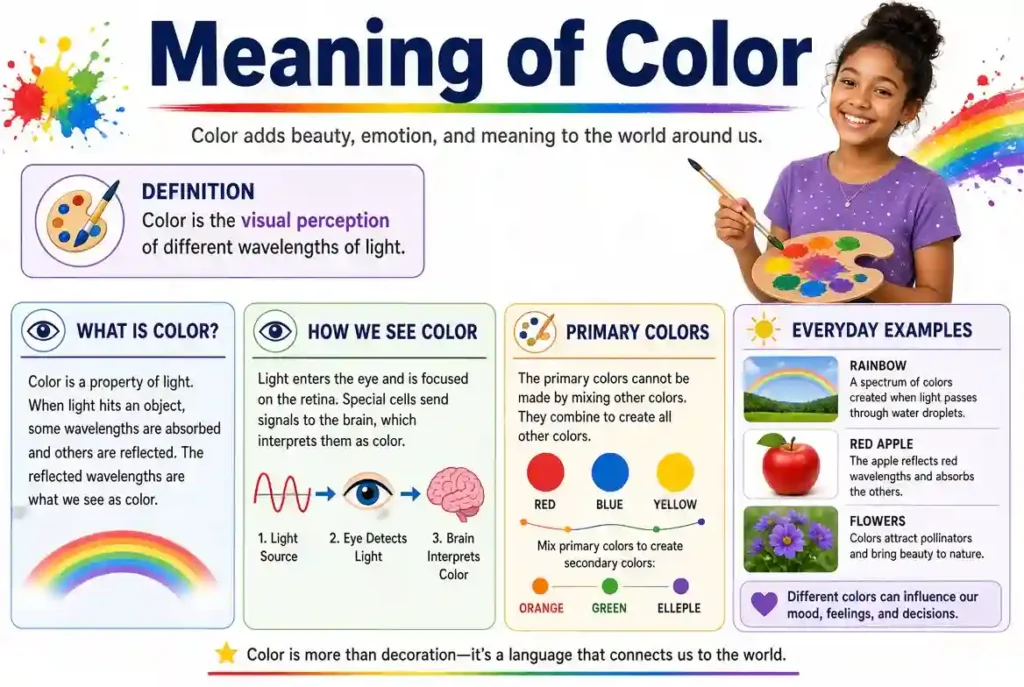
Color means the visual appearance created when light interacts with an object.
It is the standard spelling in American English.
Examples
- The color of the sky looked beautiful.
- She chose a red color for the room.
📗 Meaning of Colour
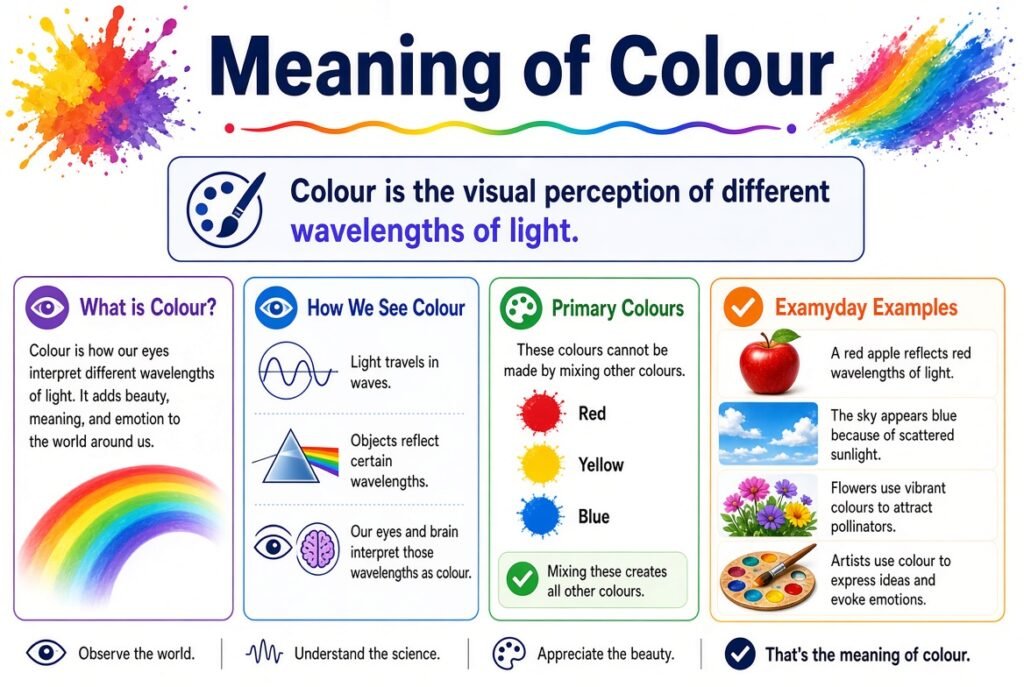
Colour has the same meaning as color.
It is the standard spelling in British English.
Examples
- The colour of the sky looked beautiful.
- She chose a red colour for the room.
🔍 Key Differences: Color vs Colour
| Feature | Color | Colour |
|---|---|---|
| Meaning | Appearance of an object | Appearance of an object |
| Tone | American English | British English |
| Usage | USA and some international contexts | UK and many Commonwealth contexts |
| Popularity | Very common globally | Very common globally |
| Spelling | One “u” | Includes “u” |
| Meaning difference | None | None |
Key point: There is no difference in meaning between color and colour.
📜 Origin & History of Color and Colour
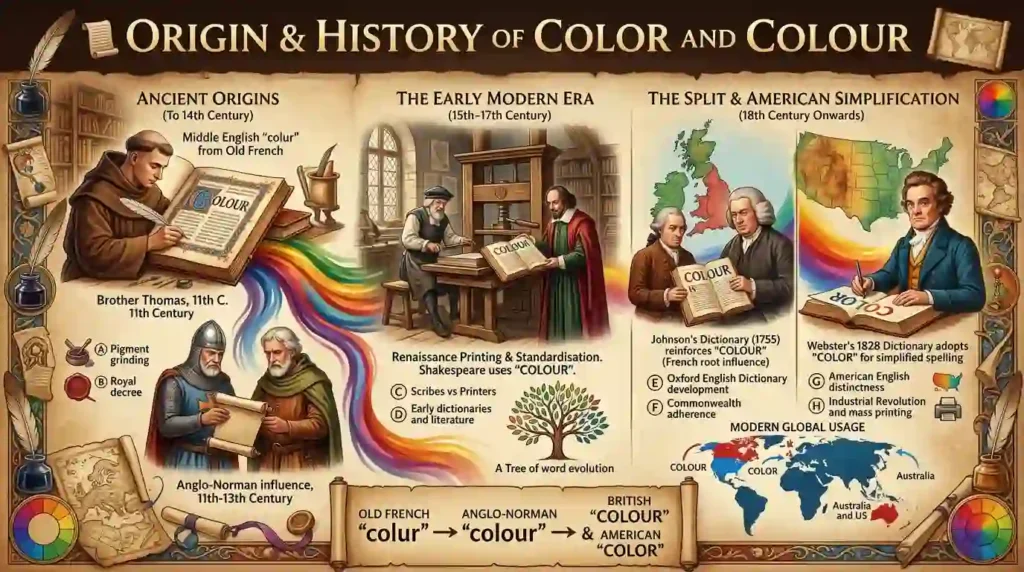
The word comes from the Latin color, meaning appearance or hue.
Old French influenced the English form colour.
British English kept the -our spelling.
American English later favored shorter spellings such as color.
Similar spelling differences include:
- Honor / Honour
- Favor / Favour
- Center / Centre
- Labor / Labour
- Neighbor / Neighbour
These differences usually reflect regional English traditions.
🇬🇧 British English vs 🇺🇸 American English Spelling
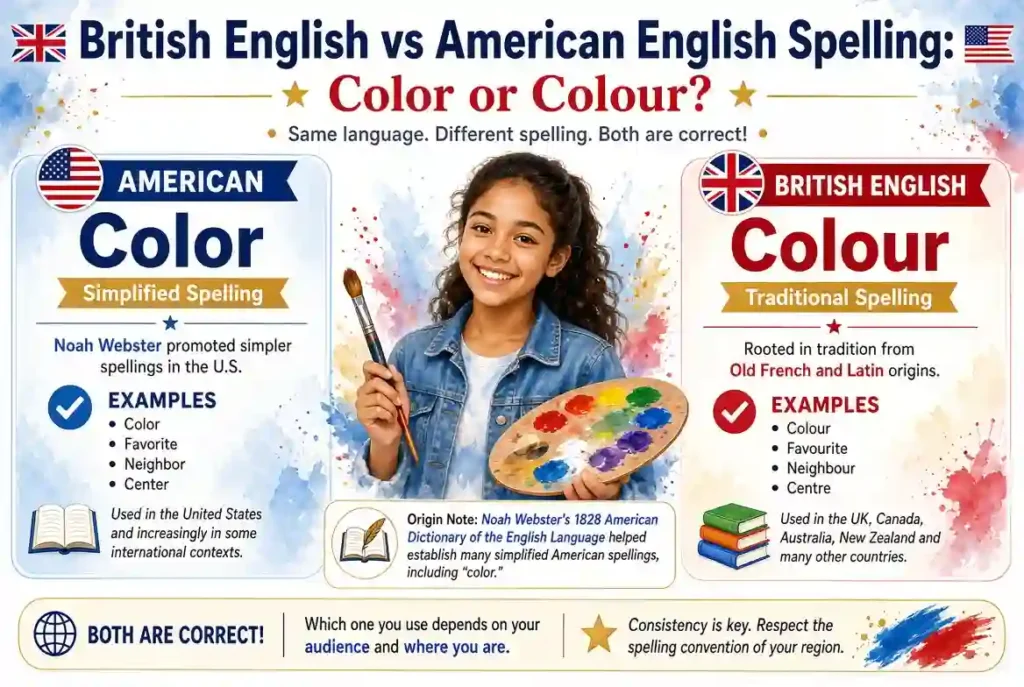
British English usually uses colour.
American English usually uses color.
Both spellings are correct in their respective English varieties.
British vs American English Comparison
| British English | American English |
|---|---|
| Colour | Color |
| Honour | Honor |
| Favour | Favor |
| Labour | Labor |
| Neighbour | Neighbor |
| Behaviour | Behavior |
| Organisation | Organization |
| Centre | Center |
🇺🇸 When to Use Color
Use color when writing for an American audience.
It works well in:
- American blogs
- US school assignments
- American newspapers
- US business documents
- American websites
- Social media for US audiences
Examples
- What is your favorite color?
- The artist used bright colors.
- This printer produces excellent color quality.
- Red is my favorite color.
- The color of the wall changed.
🇬🇧 When to Use Colour
Use colour when following British English.
It is common in:
- UK websites
- British school assignments
- UK newspapers
- British business writing
- Australian English
- New Zealand English
Examples
- What is your favourite colour?
- The artist used bright colours.
- This printer produces excellent colour quality.
- Blue is my favourite colour.
- The colour of the wall changed.
⚠️ Common Mistakes
Using colour in American writing
❌ What is your favourite colour?
✅ What is your favorite color?
Using color in British writing
❌ What is your favorite color?
✅ What is your favourite colour?
Thinking one spelling is wrong
❌ Colour is always incorrect.
✅ Colour is correct in British English.
Assuming the words have different meanings
❌ Color and colour describe different things.
✅ Color and colour have the same meaning.
🧠 Easy Trick to Remember
Remember this simple rule:
US = Color 🇺🇸
UK = Colour 🇬🇧
The British spelling has an extra U.
You can remember it as:
British English uses more letters in many -our words.
For example:
- Color → Colour
- Honor → Honour
- Favor → Favour
- Labor → Labour
🌎 Everyday Life Examples
1. Clothing and Fashion
American English:
I love the color of this dress.
British English:
I love the colour of this dress.
Both sentences have the same meaning.
2. Home Decoration
American English:
We need to choose a new color for the kitchen.
British English:
We need to choose a new colour for the kitchen.
3. Art and Design
American English:
The designer used bright colors.
British English:
The designer used bright colours.
4. School Writing
American English:
My favorite color is green.
British English:
My favourite colour is green.
Notice the second sentence also uses favourite, another British spelling.
5. Websites and Branding
American English:
The brand uses blue as its main color.
British English:
The brand uses blue as its main colour.
For websites, follow the spelling style of your target audience.
🔑 Related Keywords
Here are useful keyword variations related to is it color or colour:
- Is it color or colour?
- Is colour British spelling?
- Is color American spelling?
- British spelling of color
- American spelling of colour
✅ Final Verdict
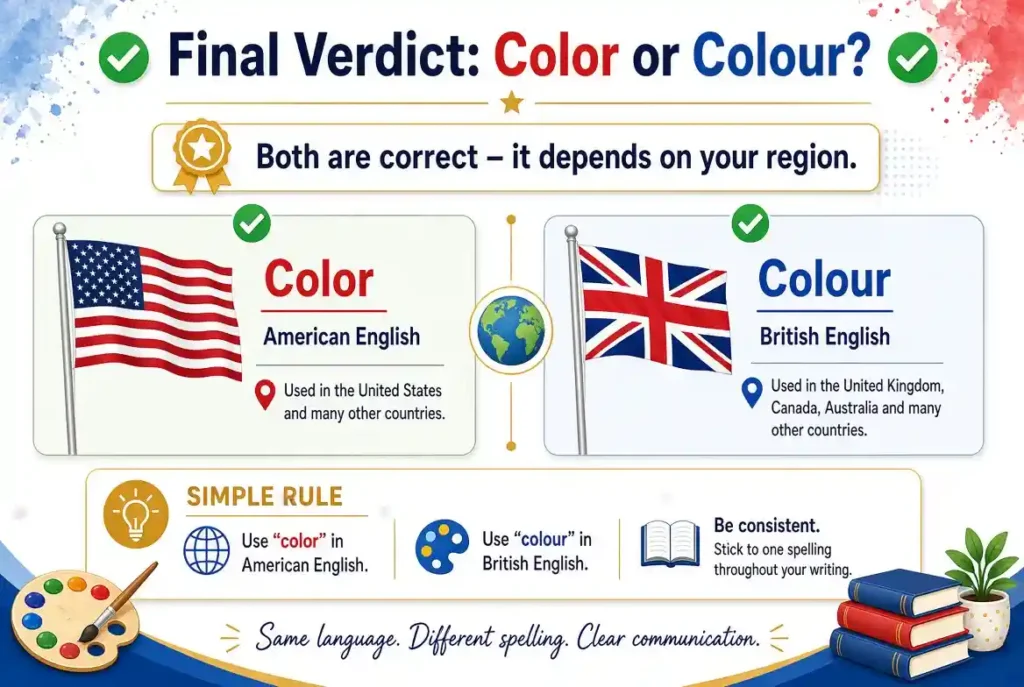
Color and colour are both correct spellings.
Choose color for American English.
Choose colour for British English.
Australian, New Zealand, and many other Commonwealth varieties generally use colour.
For international content, choose one style and use it consistently.
The most important rule is simple:
📊 Google Trends & Usage Data:

Search behavior varies by country because English spelling differs by region.
- 🇺🇸 USA: color is strongly preferred.
- 🇬🇧 UK: colour is strongly preferred.
- 🇦🇺 Australia: colour is generally preferred.
- 🇮🇳 India: colour is widely used in formal British-influenced English.
- 🇵🇰 Pakistan: colour is commonly used in British-influenced English.
Insight
The spelling usually follows the English style taught and used in each country. Color has strong global visibility because of American media and technology. Colour remains important across Britain and many Commonwealth regions.
Note: Google Trends results can change over time. Search interest also varies by query, location, and search intent.
📈 Keyword Variations Comparison
| Keyword | Main Region | Search Intent |
|---|---|---|
| Is it color or colour | Global | Spelling confusion |
| Color vs colour | Global | Comparison |
| Color or colour spelling | Global | Spelling |
| Is colour British spelling | UK/Commonwealth | Grammar |
| Is color American spelling | USA | Grammar |
| British spelling of color | UK | Spelling |
| American spelling of colour | USA | Spelling |
❓ FAQ’s
Is it correct to write color?
Yes. Color is the standard American English spelling.
What is the difference between color and colour?
There is no difference in meaning. The difference is regional spelling.
Which is more common, color or colour?
Color has wider global visibility, especially through American media. Colour remains common in British English and Commonwealth countries.
Which spelling is more formal?
Neither is more formal. Choose the spelling used by your target English variety.
📝 Conclusion
Is it color or colour? The answer depends on your English variety. Color is correct in American English. Colour is correct in British English and many Commonwealth varieties. Both words have exactly the same meaning. The main difference is spelling, not pronunciation or definition. If you write for American readers, use color throughout your content.
If you target British readers, use colour instead. Countries such as Australia, India, and Pakistan often follow British spelling traditions. The best approach is consistency. Do not mix American and British spellings without a clear reason.

Daniel Foster is a comparison analyst and content strategist at Comparelly.com. He specializes in researching products, services, tools, and industry trends to create clear, unbiased comparison guides. With a focus on accuracy and practical insights, Daniel helps readers understand key differences and make informed decisions with confidence. His goal is to simplify complex choices through trustworthy, easy-to-understand content.