Forest or forrest confuses many writers because both words look almost identical. Only one letter separates them, but the meaning changes completely. One word describes a large area covered with trees. The other is not a real common word at all.
It’s actually a proper name, often used for people or places. This mix-up happens because double letters often trick writers in English. In this guide, you will learn the correct spelling and meaning of each word. You will see clear examples, common mistakes, and an easy trick to remember forest or forrest forever.
Quick Answer (for Google snippet)
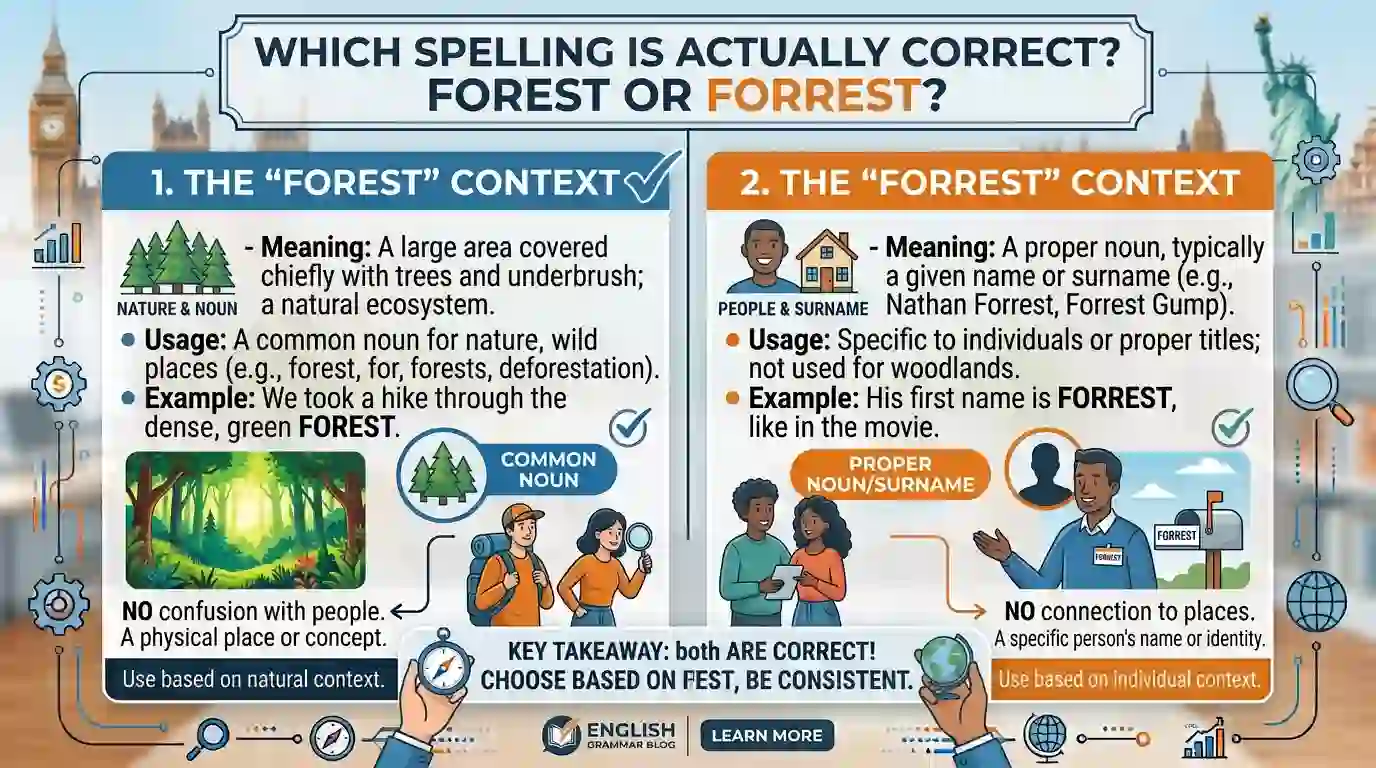
Forest is the correct spelling for a large area covered with trees. Forrest is not a standard word. It is only correct as a proper name.
Example: “We hiked through the forest all day.” ✅ Example: “Forrest Gump is a famous movie character.” ✅ (proper noun only)
Meaning Section
Meaning of Forest
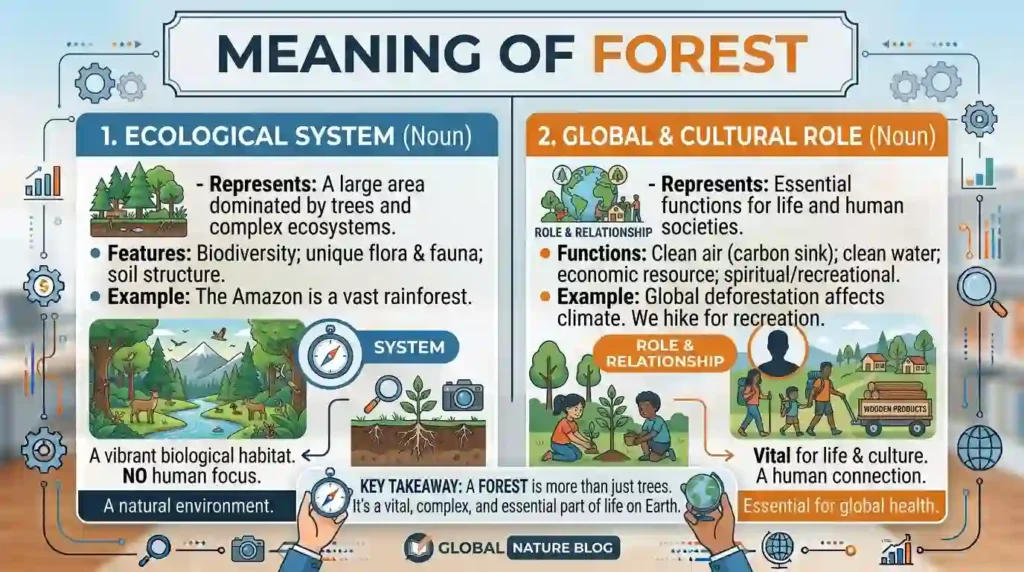
Forest means a large area of land covered mainly with trees and plants.
Examples:
- The forest was full of tall pine trees.
- Many animals live deep inside the forest.
Meaning of Forrest
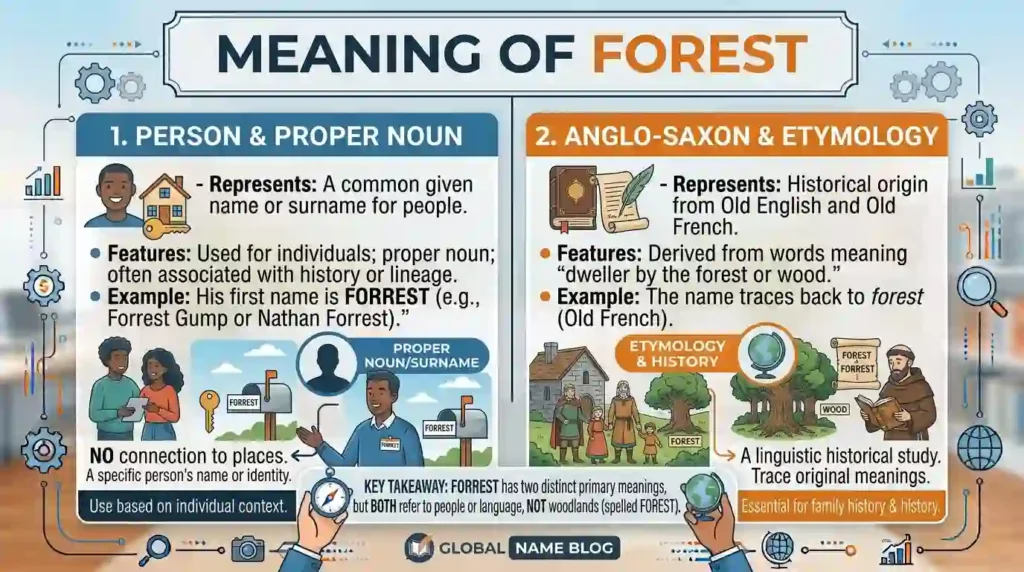
Forrest is not a standard English word. It exists only as a proper name for people or places.
Examples:
- Forrest is a common first name in the United States.
- General Forrest was a well-known historical figure.
Key Differences Table
| Feature | Forest | Forrest |
|---|---|---|
| Meaning | Large area covered with trees | Proper name for people or places |
| Tone | Natural, descriptive | Personal, name-based |
| Usage | Nature, geography, environment | Names, movies, historical figures |
| Popularity | Extremely common everyday word | Common only as a name |
Origin & History
“Forest” comes from the Old French word “forest,” meaning an unenclosed wooded area. It later entered English with the same meaning. “Forrest” developed separately as a surname, often linked to families who lived near forests.
Similar mix-ups happen with words like “dessert vs desert” and “principal vs principle,” where one extra letter changes meaning entirely.
British English vs American English Spelling
Both British and American English spell “forest” the same way. There is no regional spelling difference for this word. “Forrest” also stays the same in both regions, since it functions only as a proper name.
Comparison Table: British vs American English
| Word | British English | American English |
|---|---|---|
| Forest (trees) | Forest | Forest |
| Forrest (name) | Forrest | Forrest |
| Desert (dry land) | Desert | Desert |
When to Use Each Word
When to Use “Forest”
Use “forest” whenever you describe trees, nature, or wooded land.
Examples:
- The forest fire spread quickly across the hillside.
- We planted new trees in the local forest.
When to Use “Forrest”
Use “forrest” only when referring to someone’s actual name.
Examples:
- Forrest works as an engineer in Texas.
- The town was named after a man called Forrest.
Common Mistakes
- Incorrect: We walked through the forrest for hours. Correct: We walked through the forest for hours.
- Incorrect: The forest movie character became very famous. Correct: The Forrest movie character became very famous.
- Incorrect: Deforrestation harms wildlife around the world. Correct: Deforestation harms wildlife around the world.
- Incorrect: She loves camping in the forrest every summer. Correct: She loves camping in the forest every summer.
Easy Trick to Remember
Think: “Forest has one ‘r,’ just like trees stand in rows.”
If you mean trees and nature, use one “r” and spell it “forest.” Save “forrest” only for someone’s actual name.
Everyday Life Examples
1. Hiking and Outdoor Activities
They hiked through a dense forest near the mountains.
2. Environmental Awareness
Protecting the forest helps fight climate change effectively.
3. Movies and Pop Culture
Forrest Gump remains one of the most quoted films ever.
4. Naming a Child
Parents sometimes choose Forrest as a meaningful baby name.
5. Forest or Forrest in Writing
Writers often search “forest or forrest” to avoid spelling mistakes.
Related Keywords
- Forest or forrest spelling
- Correct spelling of forest
- Forrest name meaning
- Forest vs forrest difference
- Deforestation meaning
- Forrest Gump character
- Forest spelling mistake
Final Verdict
Use “forest” for any sentence about trees, nature, or wooded land. Use “forrest” only when writing someone’s actual name. When in doubt, “forest” is almost always the correct choice.
Google Trends & Usage Data (USA, UK, AUS, IND, PAK)
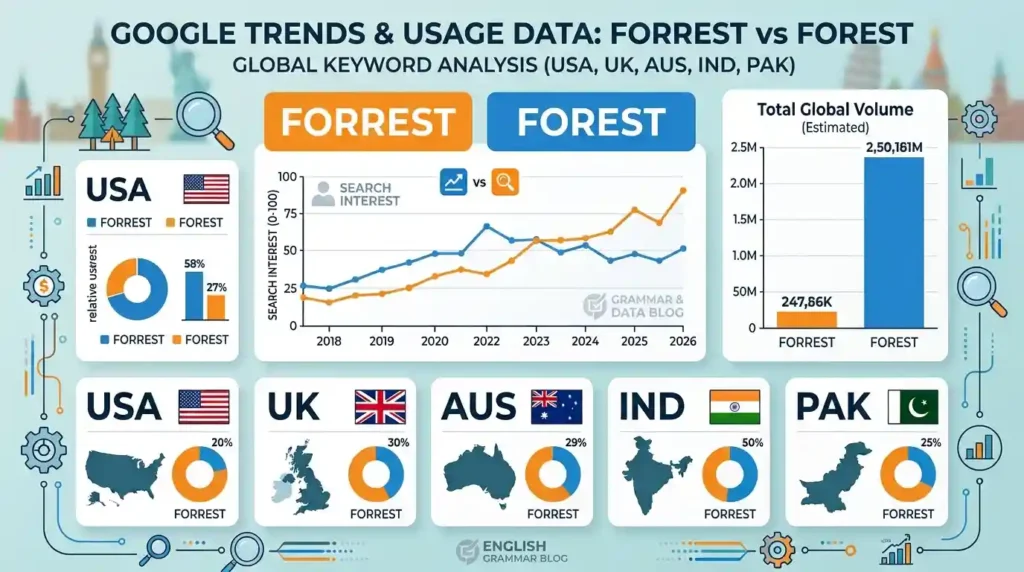
Search data shows “forest” dominates searches in all five countries by a wide margin. The USA sees extra searches for “Forrest,” largely driven by the popular movie “Forrest Gump.” The UK, Australia, India, and Pakistan mostly search “forest” for nature and environmental topics. This confirms most searches focus on the correct spelling, not the name.
Comparison Table: Keyword Variations
| Keyword Variation | Common Region | Search Intent |
|---|---|---|
| Forest or forrest | Global | Spelling confusion |
| Forest meaning | Global | Definition lookup |
| Forrest Gump | USA, UK | Movie search |
| Deforestation | India, Pakistan | Environmental research |
| Forrest name meaning | USA | Baby name search |
FAQ Section
1. Is “forest” or “forrest” correct? “Forest” is correct for trees and nature. “Forrest” is only a proper name.
2. What is the difference between forest and forrest? “Forest” describes wooded land. “Forrest” refers to a person’s name.
3. Which word is more common: forest or forrest? “Forest” is far more common, since it describes an everyday natural feature.
4. Can I use “forrest” in formal writing? Only when referring to someone’s actual name, not as a common noun.
5. Why does this confusion exist? The extra “r” in “forrest” looks similar, causing accidental spelling mistakes.
Conclusion
Forest or forrest does not have to confuse you anymore. “Forest” is the correct word for trees and nature. “Forrest” only works as a proper name for people or places. Remember the simple trick: one “r” for forest, just like trees standing tall. With this guide, you can confidently choose the right spelling every time. Clear spelling helps your writing look accurate and professional. Keep this rule in mind for your next essay, blog, or story.

Daniel Foster is a comparison analyst and content strategist at Comparelly.com. He specializes in researching products, services, tools, and industry trends to create clear, unbiased comparison guides. With a focus on accuracy and practical insights, Daniel helps readers understand key differences and make informed decisions with confidence. His goal is to simplify complex choices through trustworthy, easy-to-understand content.