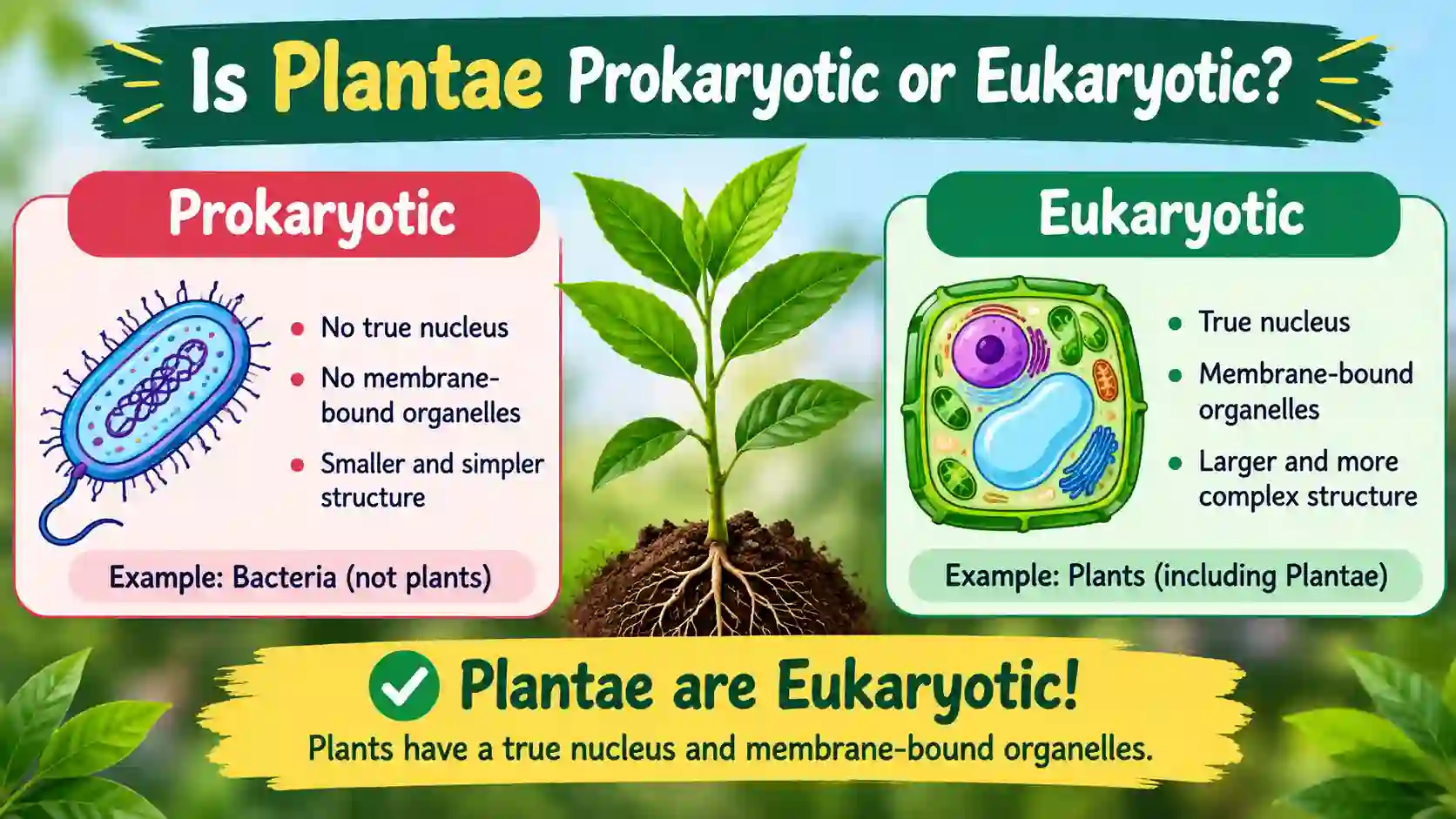
Is Plantae prokaryotic or eukaryotic? This question often confuses students learning biological classification. The answer is simple: members of Kingdom Plantae are eukaryotic organisms. Plant cells contain a true nucleus surrounded by a nuclear membrane. They also contain membrane-bound organelles, such as mitochondria and chloroplasts.
Prokaryotic cells lack these structures. This difference helps scientists separate plants from bacteria and archaea. Plants also have cell walls, large vacuoles, and chloroplasts in their photosynthetic cells. However, not every plant cell contains chloroplasts. For example, root cells usually lack chloroplasts because they receive little light. Understanding this difference makes cell classification easier. This guide explains why Plantae is eukaryotic, how plant cells differ from prokaryotic cells, and how to remember the answer.
⭐ Quick Answer (for Google snippet)
Plantae is eukaryotic. Organisms classified as plants have cells with a true nucleus and membrane-bound organelles.
Example: A sunflower is a eukaryotic organism because its cells contain nuclei.
📘 Meaning of Plantae
Plantae is the biological kingdom that includes plants. Plants are multicellular, eukaryotic organisms.
Most plants make food through photosynthesis. They use sunlight, carbon dioxide, and water to produce chemical energy.
Examples of Plantae
- 🌱 A fern belongs to Plantae.
- 🌻 A sunflower belongs to Plantae.
🔬 Meaning of Prokaryotic and Eukaryotic
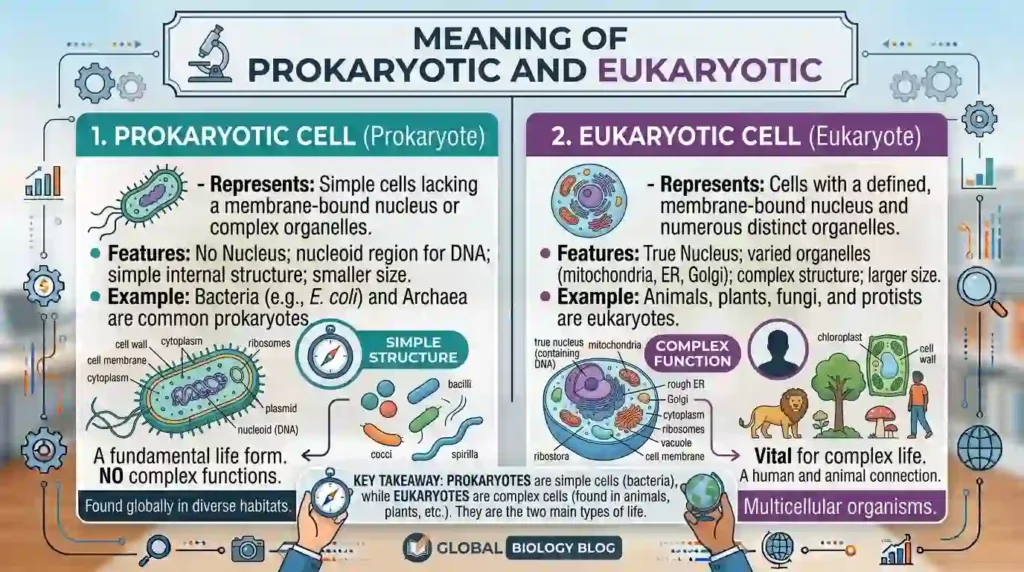
Prokaryotic describes cells that do not have a membrane-bound nucleus. Bacteria and archaea are prokaryotic organisms.
Eukaryotic describes cells that have a membrane-bound nucleus. Plants, animals, fungi, and many protists are eukaryotic.
Examples
- 🦠 Bacteria have prokaryotic cells.
- 🌳 Trees have eukaryotic cells.
📊 Key Differences: Prokaryotic vs Eukaryotic
| Feature | Prokaryotic | Eukaryotic |
|---|---|---|
| Meaning | Cells lack a true nucleus | Cells have a true nucleus |
| Nucleus | Absent | Present |
| Organelles | Few membrane-bound organelles | Many membrane-bound organelles |
| Cell size | Usually smaller | Usually larger |
| Usage | Bacteria and archaea | Plants, animals, fungi, protists |
| Popularity | Common cellular type | Common cellular type |
Where Does Plantae Fit?
| Characteristic | Plantae |
|---|---|
| Cell type | Eukaryotic |
| Nucleus | Present |
| Cell wall | Present |
| Chloroplasts | Present in photosynthetic plant cells |
| Mitochondria | Present |
| Ribosomes | Present |
| Organization | Mainly multicellular |
🧬 Origin & History of Plantae Classification
The classification of plants has changed as scientists learned more about cells and evolution.
Early systems grouped many organisms by visible features. Modern biology uses cell structure, genetics, evolution, and other evidence.
The discovery of cells helped scientists understand the major difference between prokaryotes and eukaryotes.
Similar biological terms include:
- Prokaryote — organism with prokaryotic cells.
- Eukaryote — organism with eukaryotic cells.
- Plantae — kingdom containing plants.
- Animalia — kingdom containing animals.
- Fungi — kingdom containing fungi.
🇬🇧 British English vs American English Spelling
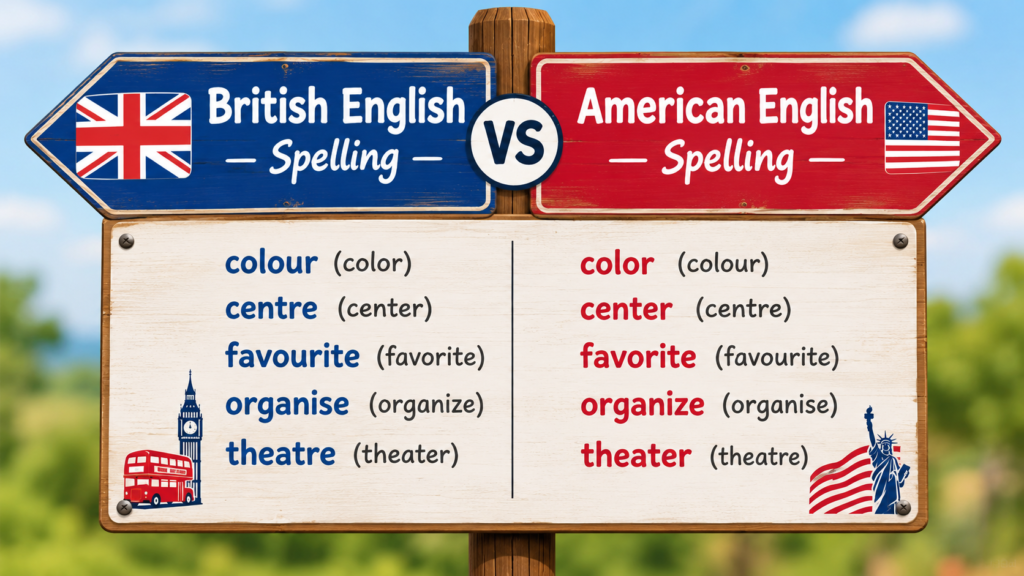
There is no major spelling difference for Plantae, prokaryotic, or eukaryotic. These scientific terms remain essentially the same in British and American English. Scientific names also follow international naming conventions.
| Term | British English | American English |
|---|---|---|
| Plantae | Plantae | Plantae |
| Prokaryotic | Prokaryotic | Prokaryotic |
| Eukaryotic | Eukaryotic | Eukaryotic |
| Cell | Cell | Cell |
| Chloroplast | Chloroplast | Chloroplast |
🌿 When to Use “Plantae”
Use Plantae when discussing the biological kingdom of plants.
Examples
- Plantae contains multicellular eukaryotic organisms.
- Scientists study Plantae to understand plant evolution.
- Mosses and flowering plants belong to Plantae.
- Plants in Plantae have eukaryotic cells.
🦠 When to Use “Prokaryotic”
Use prokaryotic when describing cells without a membrane-bound nucleus.
Examples
- Bacteria have prokaryotic cells.
- A prokaryotic cell does not have a true nucleus.
- Most bacteria are prokaryotic organisms.
- Prokaryotic cells are usually smaller than eukaryotic cells.
🔬 When to Use “Eukaryotic”
Use eukaryotic when describing cells with a membrane-bound nucleus.
Examples
- Plant cells are eukaryotic.
- Animal cells are also eukaryotic.
- A eukaryotic cell contains a true nucleus.
- Plantae consists of eukaryotic organisms.
🚫 Common Mistakes
Mistake 1: Calling Plants Prokaryotic
❌ Plants are prokaryotic organisms.
✅ Plants are eukaryotic organisms.
Why: Plant cells contain membrane-bound nuclei.
Mistake 2: Saying Plants Have No Nucleus
❌ Plant cells do not contain nuclei.
✅ Most plant cells contain a nucleus.
Why: The nucleus stores the cell’s genetic material.
Mistake 3: Confusing Chloroplasts With Nuclei
❌ Chloroplasts are the nucleus of plant cells.
✅ Chloroplasts help plant cells perform photosynthesis.
Why: The nucleus and chloroplast have different functions.
Mistake 4: Calling Bacteria Eukaryotic
❌ Bacteria are eukaryotic organisms.
✅ Bacteria are prokaryotic organisms.
Why: Bacterial cells lack a membrane-bound nucleus.
Mistake 5: Assuming Every Plant Cell Has Chloroplasts
❌ Every plant cell contains chloroplasts.
✅ Many photosynthetic plant cells contain chloroplasts.
Why: Some plant cells, such as many root cells, lack chloroplasts.
🧠 Easy Trick to Remember
Use this simple memory trick:
EU = Enclosed nucleus.
Eukaryotic cells have their DNA enclosed inside a nucleus.
PRO = Primitive-style cell structure.
Prokaryotic cells lack a membrane-bound nucleus.
So remember:
🌱 Plantae = Eukaryotic
🦠 Bacteria = Prokaryotic
This shortcut can help you answer classification questions quickly.
🌍 Everyday Life Examples
1. 🌳 Trees
Trees belong to Plantae and contain eukaryotic cells.
Primary keyword: is Plantae prokaryotic or eukaryotic
Secondary keyword: plant cells are eukaryotic
2. 🌻 Flowering Plants
A sunflower has eukaryotic cells with nuclei and other organelles.
Primary keyword: is Plantae prokaryotic or eukaryotic
Secondary keyword: Plantae eukaryotic
3. 🥕 Root Cells
Root cells are eukaryotic even though many lack chloroplasts.
Primary keyword: is Plantae prokaryotic or eukaryotic
Secondary keyword: plant cell structure
4. 🦠 Bacteria
Bacteria provide a useful comparison because they are prokaryotic.
Primary keyword: is Plantae prokaryotic or eukaryotic
Secondary keyword: prokaryotic vs eukaryotic
5. 🌿 Mosses
Mosses are plants and therefore have eukaryotic cells.
Primary keyword: is Plantae prokaryotic or eukaryotic
Secondary keyword: Kingdom Plantae characteristics
🔎 Related Keywords
- is Plantae prokaryotic or eukaryotic
- Is Kingdom Plantae prokaryotic or eukaryotic
- Plantae eukaryotic or prokaryotic
- are plants prokaryotic or eukaryotic
- plant cells prokaryotic or eukaryotic
- Kingdom Plantae characteristics
- prokaryotic vs eukaryotic cells
⚖️ Final Verdict
Plantae is eukaryotic, not prokaryotic.
Plants have cells with a membrane-bound nucleus. Their cells also contain organelles such as mitochondria.
Photosynthetic plant cells usually contain chloroplasts as well.
The easiest answer to remember is:
Kingdom Plantae → Eukaryotic → True nucleus
Bacteria and Archaea → Prokaryotic → No membrane-bound nucleus
Therefore, if a biology question asks, “Is Plantae prokaryotic or eukaryotic?”, the correct answer is eukaryotic.
📈 Google Trends & Usage Data
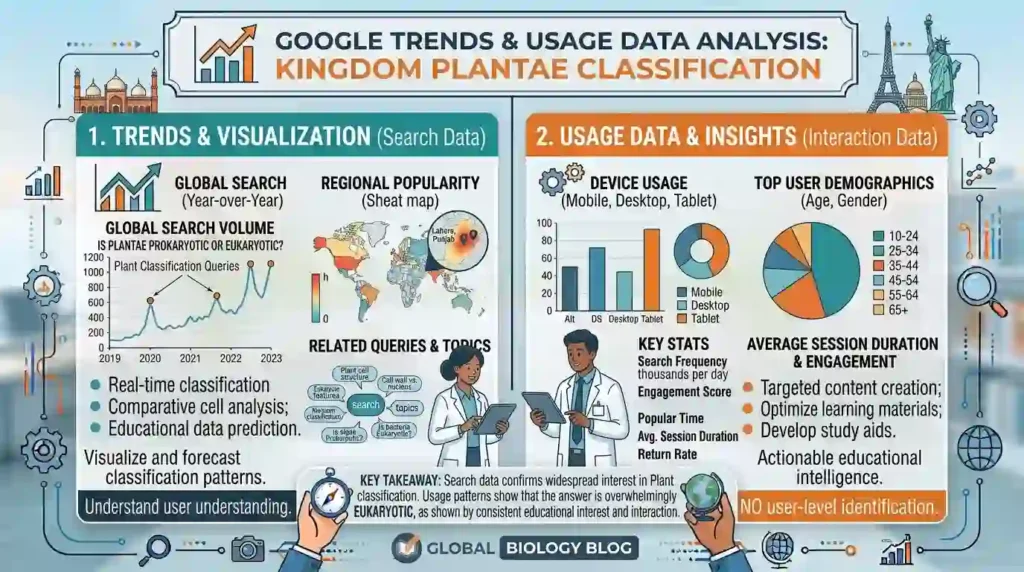
Search interest for this question usually comes from students studying cell biology and biological classification.
Related searches often include “are plants prokaryotic or eukaryotic” and “plant cells eukaryotic.”
Educational searches can vary across the USA, UK, Australia, India, and Pakistan.
The strongest related topics are usually plant cells, Kingdom Plantae, and prokaryotic versus eukaryotic cells.
Keyword Variations Comparison
| Keyword | Search Intent | Topic Focus |
|---|---|---|
| Is Plantae prokaryotic or eukaryotic | Informational | Direct classification |
| Is Kingdom Plantae prokaryotic or eukaryotic | Informational | Kingdom classification |
| Are plants prokaryotic or eukaryotic | Informational | Plant cell biology |
| Plantae eukaryotic or prokaryotic | Comparison | Cell type |
| Plant cells prokaryotic or eukaryotic | Educational | Cell structure |
| Kingdom Plantae characteristics | Informational | Plant biology |
| Prokaryotic vs eukaryotic cells | Comparison | General cell biology |
❓ FAQ
1. Is it correct to say Plantae is eukaryotic?
Yes. Organisms classified within Plantae have eukaryotic cells.
2. What is the difference between prokaryotic and eukaryotic cells?
Prokaryotic cells lack a membrane-bound nucleus. Eukaryotic cells have a membrane-bound nucleus.
3. Which is more common in Plantae, prokaryotic or eukaryotic?
Eukaryotic cells are characteristic of organisms classified as plants.
4. Is “eukaryotic” the formal term for plant cells?
Yes. Eukaryotic is the standard scientific term for cells with membrane-bound nuclei.
5. Why does confusion about Plantae exist?
Students may confuse plant cells with bacteria because both can have cell walls. Their internal cell structures differ greatly.
📝 Conclusion
The answer to “is Plantae prokaryotic or eukaryotic?” is clear: Plantae is eukaryotic. Plants have cells with a membrane-bound nucleus and several specialized organelles. These features separate them from prokaryotic organisms such as bacteria. Plant cells also commonly have cell walls and chloroplasts.
However, not every plant cell contains chloroplasts. The key feature remains the presence of a true nucleus. Remember the simple rule: Plantae equals eukaryotic. Prokaryotic cells do not have a membrane-bound nucleus. Eukaryotic cells do. This difference makes biological classification easier to understand. Whether you study trees, flowers, mosses, or crops, plants belong to the eukaryotic group.

Daniel Foster is a comparison analyst and content strategist at Comparelly.com. He specializes in researching products, services, tools, and industry trends to create clear, unbiased comparison guides. With a focus on accuracy and practical insights, Daniel helps readers understand key differences and make informed decisions with confidence. His goal is to simplify complex choices through trustworthy, easy-to-understand content.