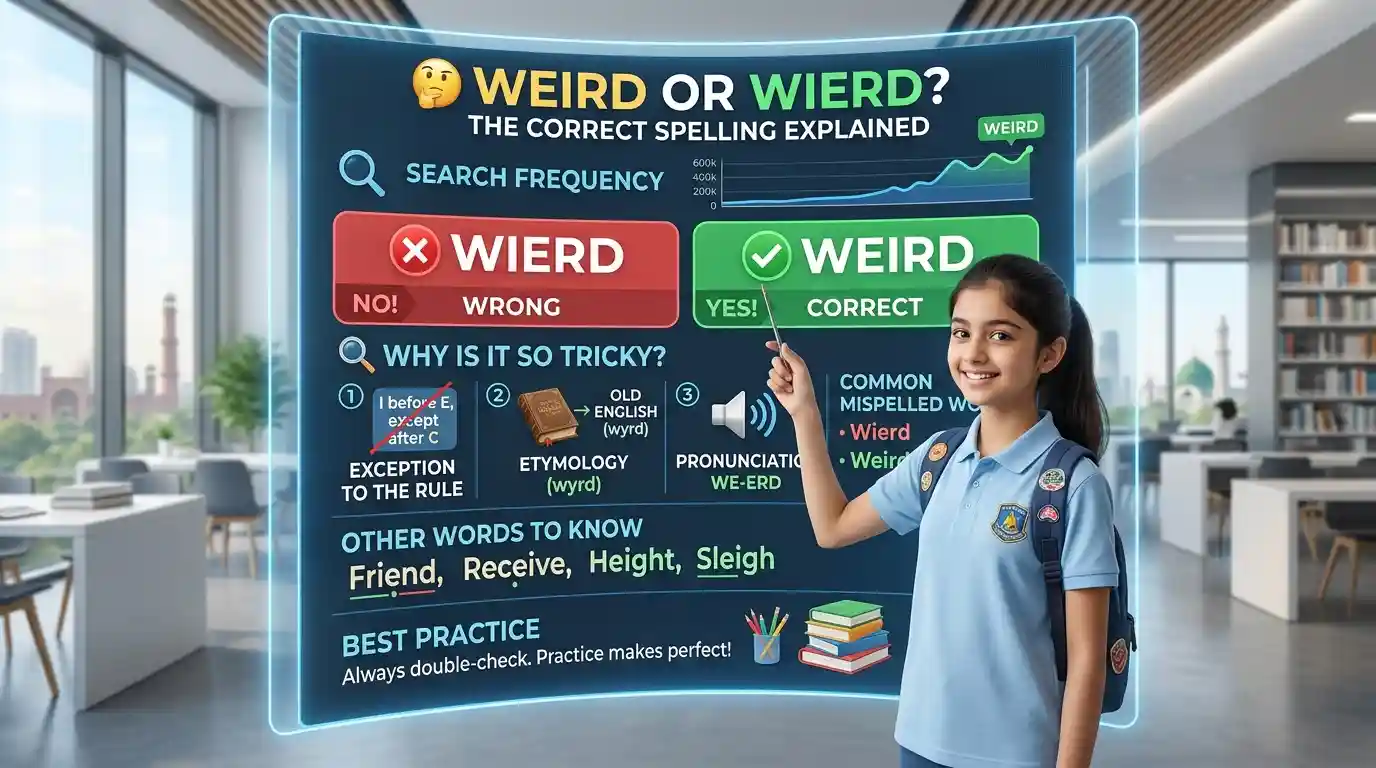
Weird or wierd is a common spelling confusion in English. Many people write “wierd” because the word does not follow the usual i before e spelling pattern. However, weird is the correct standard spelling. The spelling “wierd” is incorrect in standard English. The word weird describes something strange, unusual, or unexpected.
You may use it for a strange experience, person, sound, idea, or situation. Learning the correct spelling can help you avoid mistakes in school, work, and online writing. This guide explains the difference between weird and wierd in simple English. You will learn their meanings, history, correct usage, common mistakes, and easy memory tricks. We also cover British and American English usage and useful examples for everyday writing.
⭐ Quick Answer
Weird is the correct spelling. Wierd is a common spelling mistake and should not be used in standard English.
Example: That was a weird dream.
📖 Meaning of Weird
Weird means strange, unusual, unexpected, or difficult to explain.
It can describe people, events, feelings, objects, sounds, or situations.
Examples
- That was a weird dream.
- She heard a weird noise outside.
The word can have a negative, neutral, or playful tone.
For example, calling a movie weird can mean it feels unusual rather than bad.
❌ Meaning of Wierd
Wierd is not the standard English spelling of the word.
People commonly write it by applying the familiar i before e spelling rule.
However, the correct spelling is weird.
Incorrect Examples
- ❌ That movie was wierd.
- ❌ I had a wierd feeling yesterday.
Correct Forms
- ✅ That movie was weird.
- ✅ I had a weird feeling yesterday.
📊 Weird vs Wierd: Key Differences
| Feature | Weird | Wierd |
|---|---|---|
| Meaning | Strange or unusual | No standard meaning |
| Tone | Can be neutral, negative, or playful | Incorrect spelling |
| Usage | Used in standard English | Common spelling mistake |
| Popularity | Very common | Common as a misspelling |
| Correct? | ✅ Yes | ❌ No |
| Example | That is a weird idea. | That is a wierd idea. ❌ |
The Main Difference
There is only one important difference:
Weird is correct. Wierd is incorrect.
📜 Origin & History of Weird

The word weird has an interesting history.
It comes from an Old English word connected with fate or destiny.
In older English, weird could refer to fate or the power controlling someone’s destiny.
The word later developed its modern meaning of something strange or unusual.
Shakespeare helped popularize the word through “weird sisters” in Macbeth.
Today, weird usually means strange, unusual, or unexpected.
Similar Word Examples
- Strange
- Unusual
- Odd
- Uncommon
- Peculiar
- Bizarre
- Unusual
These words can sometimes replace weird, depending on the sentence.
🇬🇧 British English vs American English Spelling
Weird has the same spelling in British and American English.
Neither variety uses wierd as the standard spelling.
The pronunciation and meaning also remain essentially the same.
British vs American English
| Feature | British English | American English |
|---|---|---|
| Correct spelling | weird | weird |
| Incorrect spelling | wierd | wierd |
| Meaning | Strange or unusual | Strange or unusual |
| Standard usage | weird | weird |
| Example | That is weird. | That is weird. |
✍️ When to Use “Weird”
Use weird when something feels strange, unusual, or unexpected.
Examples
- That was a weird question.
- I had a weird dream.
- This place feels weird.
- He told me a weird story.
- There was a weird sound outside.
Weird in Casual Writing
Weird is very common in everyday English.
People often use it when talking about unusual experiences.
That was a really weird experience.
🚫 When to Use “Wierd”
You should not use “wierd” in standard English writing.
It is a misspelling of weird.
Avoid These Forms
- ❌ wierd
- ❌ wierdly
- ❌ wierdest
Use These Forms
- ✅ weird
- ✅ weirdly
- ✅ weirdest
Always check the spelling before publishing formal or professional content.
⚠️ Common Mistakes
1. Writing “Wierd”
❌ Incorrect: This is a wierd situation.
✅ Correct: This is a weird situation.
2. Applying “I Before E”
❌ Incorrect: I before E always means wierd.
✅ Correct: Weird is an exception to the familiar spelling rule.
3. Using “Wierd” in Formal Writing
❌ Incorrect: The report describes a wierd result.
✅ Correct: The report describes a weird result.
4. Misspelling Related Forms
❌ Incorrect: That was the wierdest thing ever.
✅ Correct: That was the weirdest thing ever.
🧠 Easy Trick to Remember Weird
The easiest trick is:
WEIRD starts with “WE,” not “WIE.”
Remember this phrase:
“Weird is WEIRD.”
Another useful trick is to remember that weird breaks the common “i before e” pattern.
So write:
W-E-I-R-D ✅
Not:
W-I-E-R-D ❌
🌟 Everyday Life Examples
1. A Weird Dream
You wake up after an unusual dream.
Example:
“I had a weird dream last night.”
Primary keyword: weird or wierd
Secondary keyword: weird spelling
2. A Weird Sound
You hear an unusual sound from another room.
Example:
“There was a weird sound coming from the kitchen.”
Primary keyword: weird or wierd
Secondary keyword: correct spelling of weird
3. A Weird Movie
Some movies have unusual stories or characters.
Example:
“That was one of the weirdest movies I have seen.”
Primary keyword: weird or wierd
Secondary keyword: weird vs wierd
4. A Weird Feeling
Sometimes a situation gives you an unusual feeling.
Example:
“I had a weird feeling about that place.”
Primary keyword: weird or wierd
Secondary keyword: is wierd a word
5. A Weird Situation
Unexpected events can feel strange.
Example:
“It was weird to see the store completely empty.”
Primary keyword: weird or wierd
Secondary keyword: weird spelling mistake
🔎 Related Keywords
- Weird or wierd
- Weird vs wierd
- Is wierd a word?
- Is weird spelled wierd?
- Correct spelling of weird
- Weird spelling
- How to spell weird
✅ Final Verdict
Weird is the correct spelling.
Wierd is a common spelling mistake.
Use weird when describing something strange, unusual, or unexpected.
Correct:
That is a weird story. ✅
Incorrect:
That is a wierd story. ❌
The spelling stays weird in both British and American English.
Remember:
W-E-I-R-D = Weird ✅
📈 Google Trends & Usage Data: USA, UK, Australia, India, Pakistan
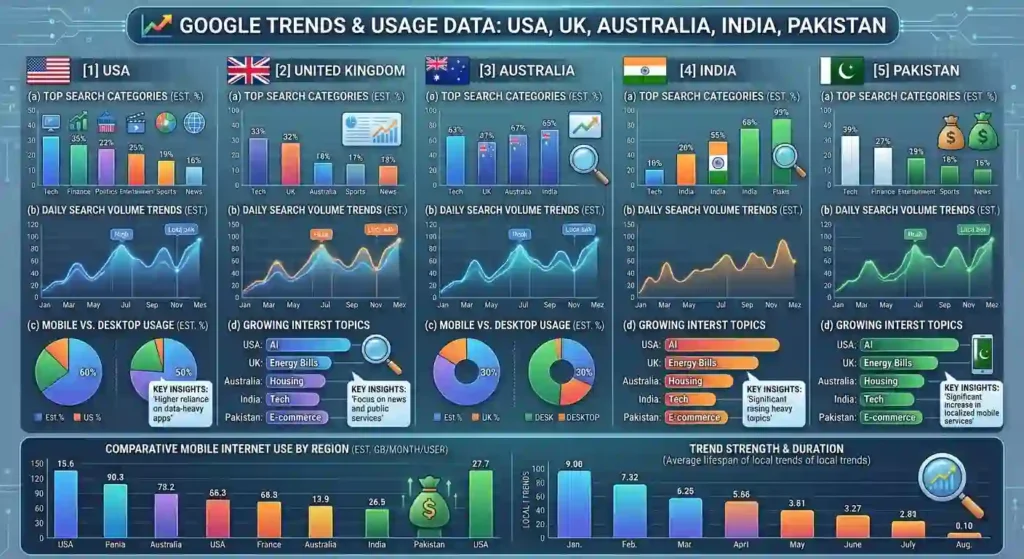
Search interest for weird or wierd mainly comes from spelling confusion and language-learning searches.
The correct form weird has much broader everyday usage than the misspelling wierd.
Users in the USA, UK, Australia, India, and Pakistan may search both forms when checking spelling.
🌎 Country-Level SEO Insight
| Country | Main Search Intent | Strong Keyword Opportunity |
|---|---|---|
| 🇺🇸 USA | Spelling and everyday usage | weird or wierd |
| 🇬🇧 UK | English spelling | weird spelling |
| 🇦🇺 Australia | Grammar and spelling | weird vs wierd |
| 🇮🇳 India | English learning | correct spelling of weird |
| 🇵🇰 Pakistan | English learning | is wierd a word |
SEO insight: Target the exact confusion keyword first. Then answer related searches about spelling, meaning, and usage.
📊 Keyword Variations Comparison
| Keyword | Intent | SEO Value |
|---|---|---|
| weird or wierd | Spelling comparison | Very High |
| wierd or weird | Spelling comparison | High |
| weird vs wierd | Comparison | High |
| is wierd a word | Spelling question | High |
| correct spelling of weird | Educational | High |
| how to spell weird | Spelling | High |
| weird spelling | Informational | Medium-High |
❓ FAQ’s
Is it correct to spell it “wierd”?
No. Wierd is a common misspelling. The correct spelling is weird.
What is the difference between weird and wierd?
Weird is the correct English word. Wierd is an incorrect spelling.
Which is more common, weird or wierd?
Weird is far more common because it is the correct standard spelling.
Is weird formal or informal?
Weird works in both casual and formal writing. However, alternatives like unusual may sound more professional in some contexts.
Why does confusion between weird and wierd exist?
The confusion comes from the familiar “i before e” spelling pattern. Weird is an exception to that pattern.
📝 Conclusion
The answer to weird or wierd is simple: weird is correct. The spelling wierd is a common mistake. Weird means strange, unusual, unexpected, or difficult to explain. It can describe a dream, person, sound, movie, feeling, or situation. The word has the same standard spelling in British and American English.
Many people misspell it because they remember the common “i before e” rule. However, English has several spelling exceptions. The best way to remember weird is to focus on its first four letters: WEIR. When writing emails, school assignments, articles, or social posts, always use weird. Avoid wierd because it is not the standard spelling.

Daniel Foster is a comparison analyst and content strategist at Comparelly.com. He specializes in researching products, services, tools, and industry trends to create clear, unbiased comparison guides. With a focus on accuracy and practical insights, Daniel helps readers understand key differences and make informed decisions with confidence. His goal is to simplify complex choices through trustworthy, easy-to-understand content.