While Or Whilst is a common grammar question that confuses many English learners and writers. Both words have the same basic meaning and are often used to connect two actions happening at the same time. However, there are important differences in tone, style, and regional usage.
Understanding the difference between while and whilst can help you write more naturally and choose the right word for your audience. One form is more common in modern English, while the other is often linked to traditional British writing. In this guide, you will learn the meaning, history, usage, examples, and key differences between these two words. By the end, you will know exactly when to use each one with confidence.
Quick Answer
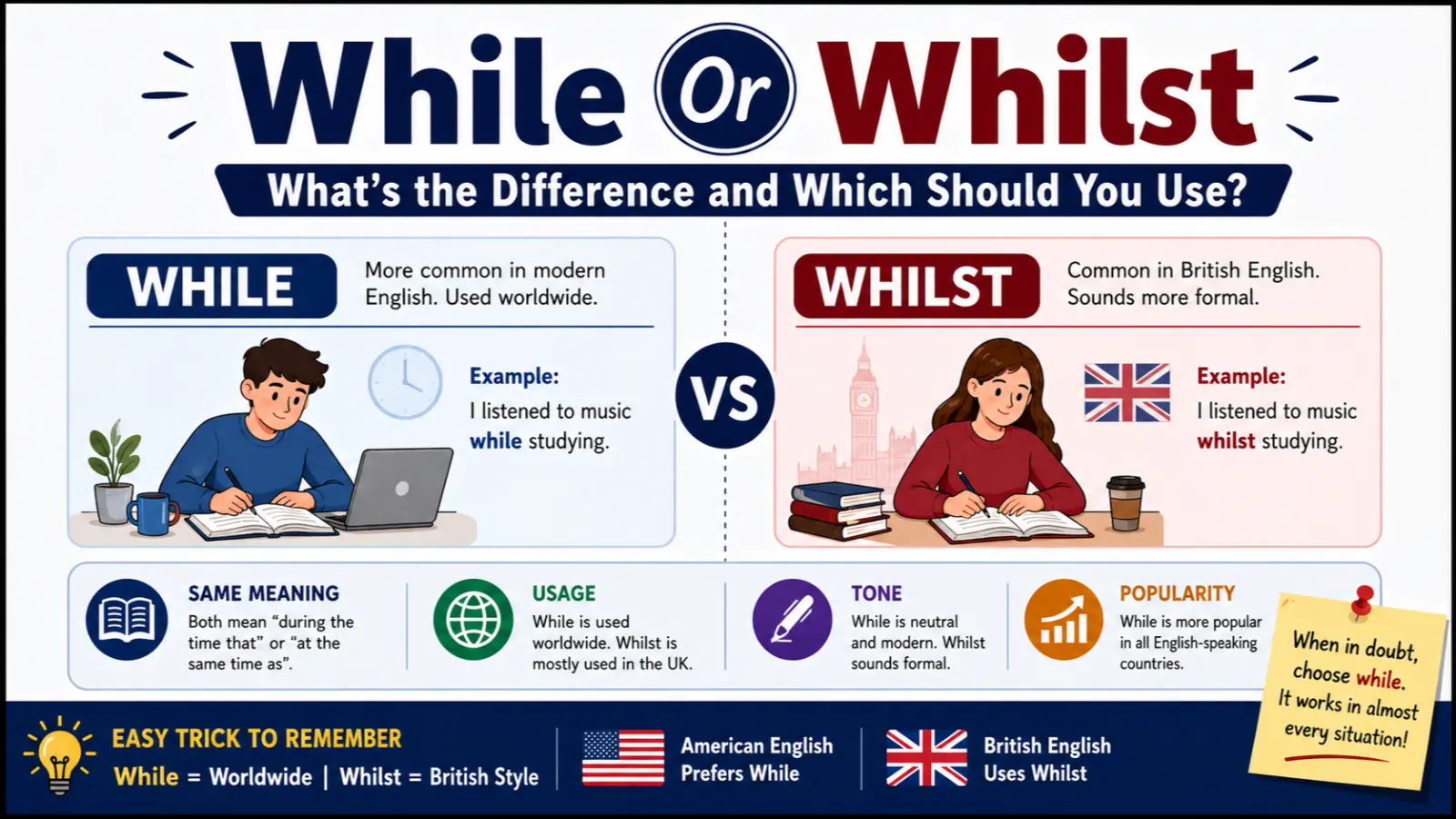
While and whilst have the same meaning. Both mean “during the time that” or “at the same time as.”
While is more common in modern English worldwide, especially in American English. Whilst is mainly used in British English and often sounds more formal.
Example:
- I listened to music while studying.
- I listened to music whilst studying.
Both sentences are correct.
Meaning of While
While means during the time that something happens or at the same time as another action.
Examples
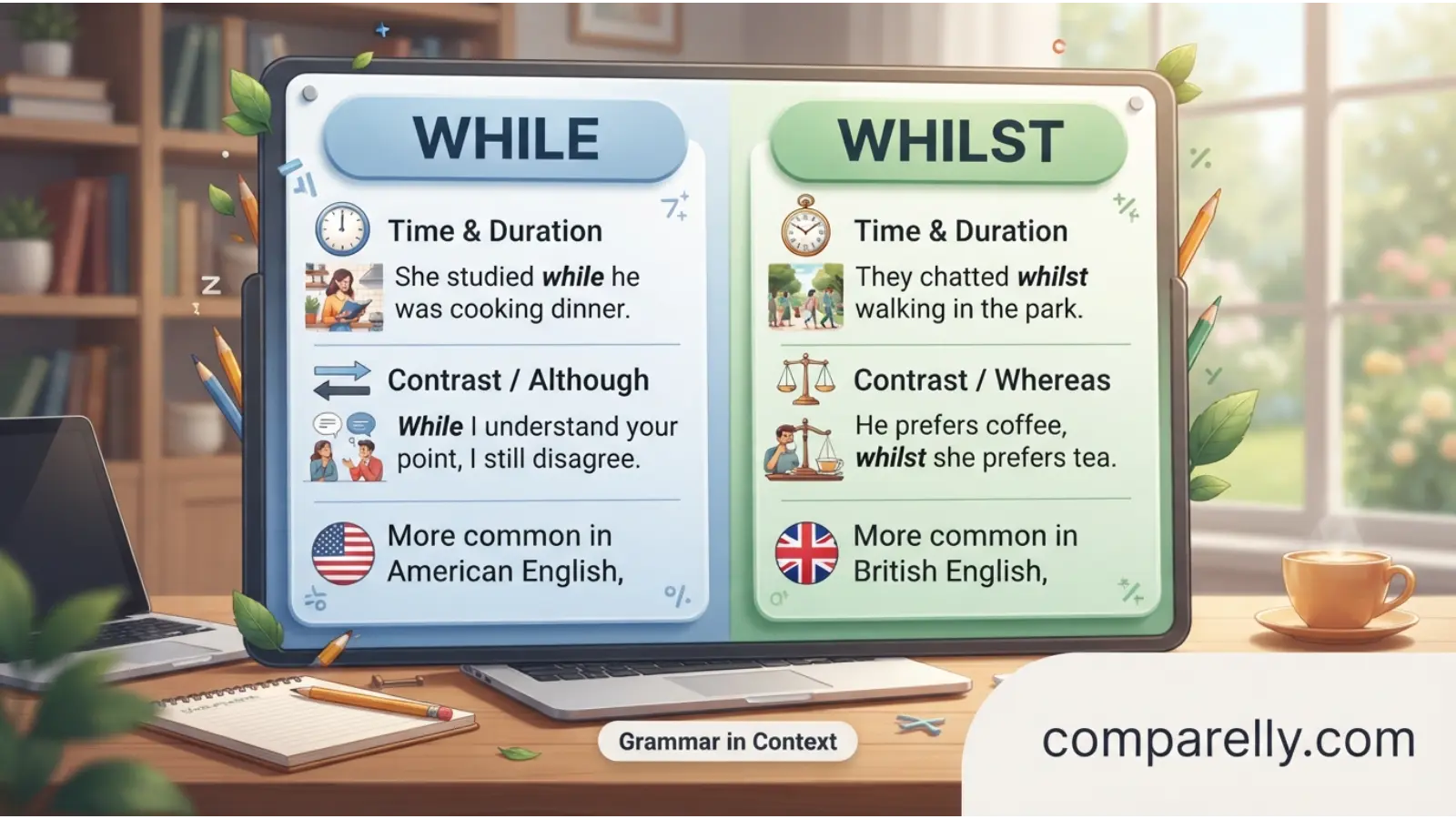
- She cooked dinner while watching TV.
- I checked my emails while waiting for the bus.
Meaning of Whilst
Whilst means exactly the same as while. It is simply a more traditional form commonly used in British English.
Examples
- He read a book whilst traveling.
- She listened carefully whilst taking notes.
Key Differences Between While and Whilst
| Feature | While | Whilst |
|---|---|---|
| Meaning | During the same time | During the same time |
| Tone | Neutral and modern | More formal and traditional |
| Usage | Worldwide | Mostly British English |
| Popularity | Very common | Less common |
| American English | Preferred | Rare |
| British English | Common | Also common |
Origin & History
Both while and whilst come from Old English.
- While developed from older forms meaning “a period of time.”
- Whilst appeared later as a variation with the added ending “-st.”
Similar word pairs include:
- Among / Amongst
- Amid / Amidst
- Toward / Towards
In modern English, shorter forms are generally more popular.
British English vs American English Spelling
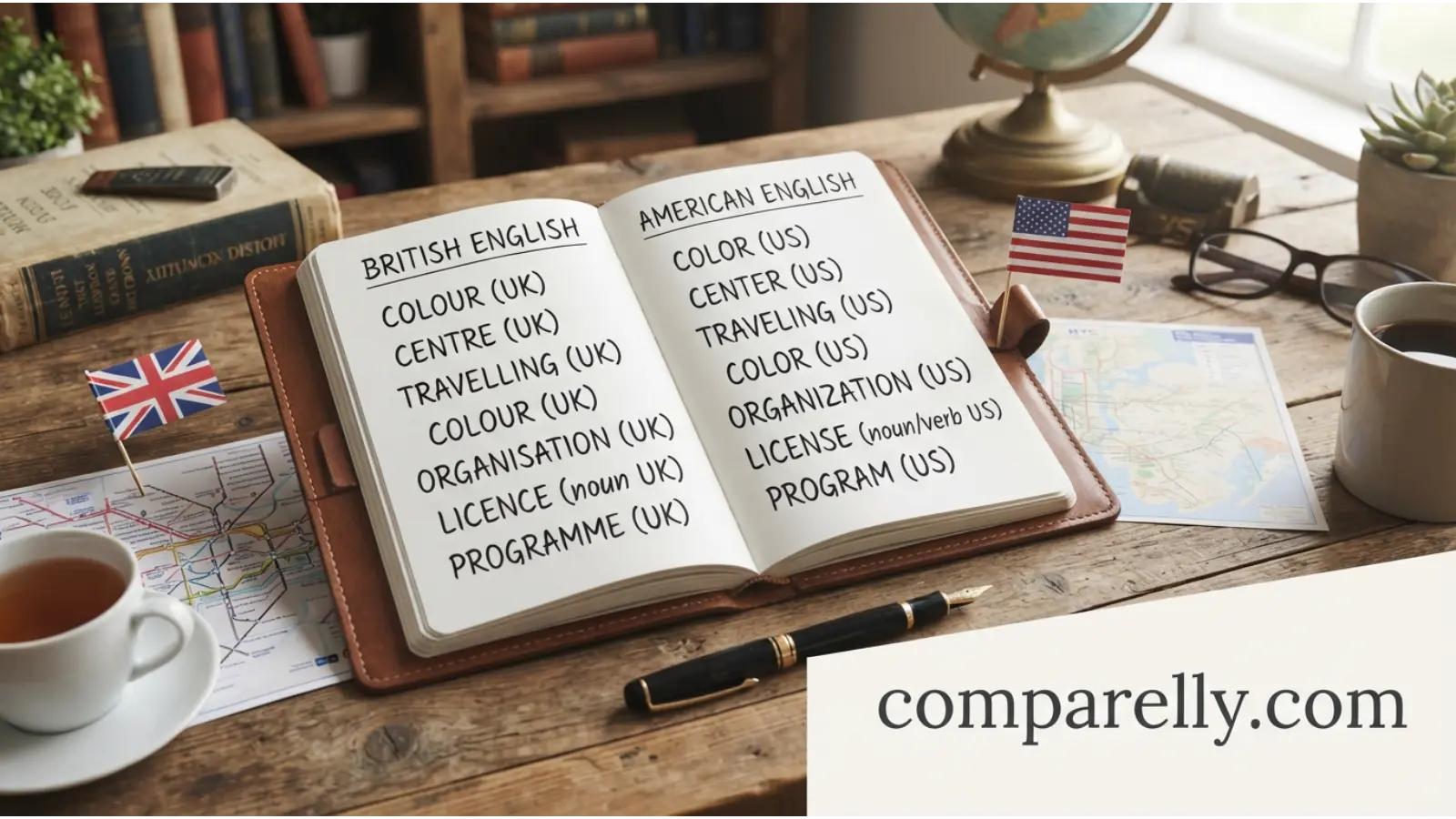
British English often keeps older language forms that sound more traditional. American English usually prefers simpler and shorter versions. This explains why whilst remains common in some British writing but is rarely seen in American publications.
Comparison Table: British vs American English
| British English | American English |
|---|---|
| Whilst | While |
| Amongst | Among |
| Amidst | Amid |
| Towards | Toward |
When to Use While
Use while when:
- Writing for an international audience.
- Creating business or academic content.
- Writing in American English.
- Using modern and natural language.
Examples
- I worked while listening to music.
- She smiled while reading the message.
- We talked while walking home.
When to Use Whilst
Use whilst when:
- Writing in traditional British English.
- Creating formal British content.
- Matching a specific writing style.
Examples
- He reviewed documents whilst traveling.
- She spoke softly whilst entering the room.
- They discussed plans whilst having lunch.
Common Mistakes

Mistake 1
❌ Whilst is more correct than while.
✅ Both are correct.
Mistake 2
❌ Americans commonly use whilst.
✅ Americans usually use while.
Mistake 3
❌ While and whilst have different meanings.
✅ They have the same meaning.
Mistake 4
❌ Whilst sounds modern.
✅ Whilst sounds more traditional and formal.
Easy Trick to Remember
- While = Worldwide
- Whilst = British Style
If you are unsure, choose while. It works in almost every situation.
Write 5 Examples
Example 1: At School
I completed my homework while listening to a podcast.
I completed my homework whilst listening to a podcast.
Example 2: At Work
She answered calls while preparing reports.
She answered calls whilst preparing reports.
Example 3: At Home
They cleaned the house while playing music.
They cleaned the house whilst playing music.
Example 4: During Travel
He slept while traveling by train.
He slept whilst traveling by train.
Example 5: Online Learning
Students took notes while watching the lecture.
Students took notes whilst watching the lecture.
Related Keywords
- while vs whilst
- whilst meaning
- while meaning
- difference between while and whilst
- while or whilst grammar
- whilst in British English
- while in American English
Google Trends & Usage Data
Google search trends show that while is searched and used far more often than whilst worldwide.
- USA: While dominates almost all searches.
- UK: Both appear, but while still leads overall.
- Australia: While is more common, whilst remains visible.
- India: While is strongly preferred.
- Pakistan: While is the dominant choice.
Insight
Global content creators should usually choose while because it is more familiar to most readers. Whilst remains useful for audiences expecting traditional British English.
Comparison Table: Keyword Variations
| Keyword Variation | Search Intent |
|---|---|
| while or whilst | Comparison |
| while vs whilst | Comparison |
| difference between while and whilst | Grammar |
| whilst meaning | Definition |
| while meaning | Definition |
| when to use whilst | Usage |
| while in American English | Regional Usage |
Final Verdict
While is the better choice for most writing situations. It is modern, widely accepted, and preferred in both professional and everyday communication.
Use whilst only if you are writing in a traditional British style or want a slightly formal tone.
For most readers around the world, while is the safest and most natural option.
FAQs:
Is it correct to use whilst?
Yes. Whilst is grammatically correct and widely accepted in British English.
What is the difference between while and whilst?
There is no difference in meaning. The main difference is style and regional preference.
Which is more common, while or whilst?
While is much more common worldwide.
Is whilst more formal?
Yes. Whilst often sounds more formal or traditional than while.
Why does the confusion exist?
The confusion exists because both words have the same meaning but different usage patterns across English-speaking regions.
Conclusion
While Or Whilst is a comparison between two words that share the same meaning but differ in style and popularity. Both can be used to describe actions happening at the same time. However, while is the preferred choice in modern English and is widely used across the United States, the United Kingdom, Australia, India, and Pakistan. Whilst remains correct but appears mainly in British English and formal writing. If your goal is clear and natural communication, while is usually the best option. Understanding this difference helps you write confidently and choose the form that matches your audience and writing style.

Daniel Foster is a comparison analyst and content strategist at Comparelly.com. He specializes in researching products, services, tools, and industry trends to create clear, unbiased comparison guides. With a focus on accuracy and practical insights, Daniel helps readers understand key differences and make informed decisions with confidence. His goal is to simplify complex choices through trustworthy, easy-to-understand content.