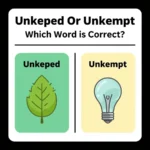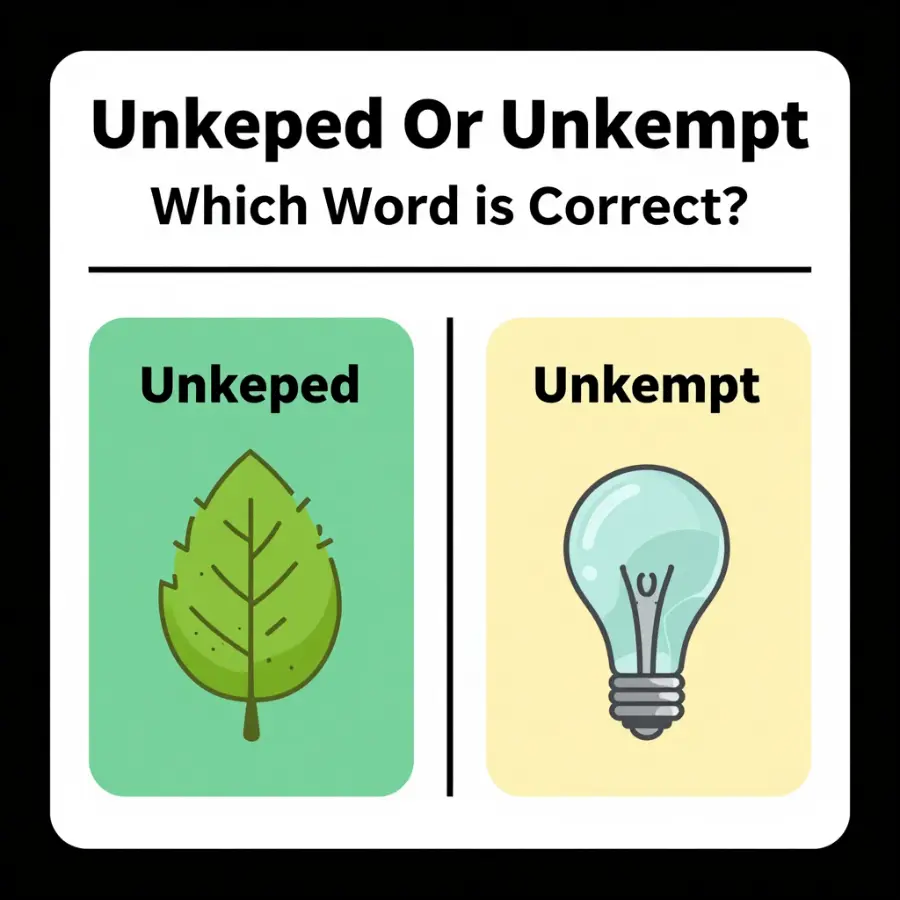
Unkept Or Unkempt can confuse even experienced English writers. Both words exist, but they have different meanings and uses. Unkept usually means not kept, maintained, fulfilled, or cared for. Unkempt usually describes something messy, untidy, or poorly groomed.
For example, you can have an unkept promise. You can also have unkempt hair. The two words look almost identical. However, the extra m changes the meaning.
Many writers use unkept when they mean unkempt. This mistake often happens when describing someone’s messy appearance. Both words can describe neglected things, which adds more confusion. Still, context helps you choose the right word.
This guide explains unkept or unkempt, their meanings, differences, history, usage, and common mistakes. You will also learn an easy trick to remember them.
Quick Answer
Both unkept and unkempt are correct English words. Unkept means not kept, fulfilled, or maintained. Unkempt means messy, untidy, or poorly groomed.
Example:
- She made an unkept promise.
- He arrived with unkempt hair.
Meaning of Unkept
Unkept is an adjective. It generally means something was not kept, maintained, observed, or fulfilled.
It often appears with words such as promise, commitment, contract, garden, building, or property.
Cambridge defines unkept as something that has not been fulfilled or properly cared for.
Examples of Unkept
- The politician made several unkept promises.
- The old garden looked unkept after years of neglect.
Simple Meaning
Unkept = not kept, maintained, or fulfilled.
The word can describe something that someone failed to maintain. It can also describe something someone failed to fulfill.

Meaning of Unkempt
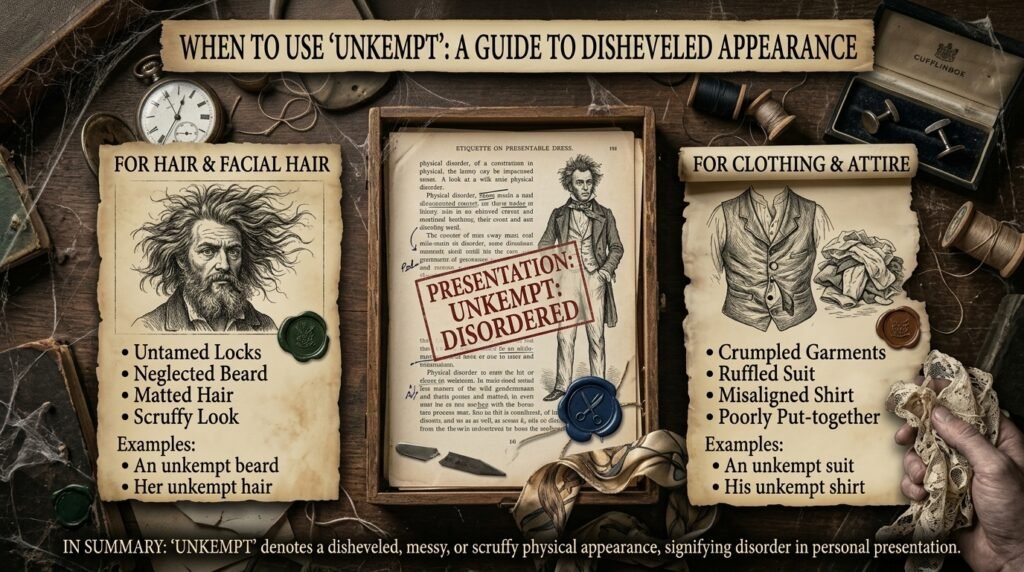
Unkempt is an adjective that means messy, untidy, neglected, or poorly groomed.
It often describes a person’s hair, clothing, appearance, beard, or general appearance.
It can also describe places that look neglected or untidy.
Examples of Unkempt
- His unkempt hair made him look tired.
- The man arrived wearing an unkempt beard.
Simple Meaning
Unkempt = messy, untidy, or poorly groomed.
The word is especially common when describing physical appearance.
Unkept Or Unkempt: Key Differences
| Feature | Unkept | Unkempt |
|---|---|---|
| Meaning | Not kept or fulfilled | Messy or poorly groomed |
| Tone | Neutral or negative | Usually negative |
| Usage | Promises, contracts, gardens, buildings | Hair, clothes, appearance, places |
| Popularity | Less common | More common |
| Common phrase | Unkept promise | Unkempt hair |
| Main idea | Something was not kept | Something looks untidy |
The main difference is simple.
Unkept focuses on something that was not kept or maintained.
Unkempt focuses on something that looks untidy or neglected.
Origin & History of Unkept and Unkempt
The two words have different histories.
Unkept comes naturally from the verb keep. The prefix un- gives it a negative meaning. Therefore, unkept can mean “not kept.”
For example, an unkept promise is a promise that someone failed to honor.
Unkempt has a more unusual history. It comes from an older form related to grooming and arranging hair. Its meaning developed toward being untidy or poorly groomed.
Modern dictionaries recognize both words, although their meanings differ.
Similar Word Examples
Other words use similar negative prefixes:
- Unclean = not clean
- Unfinished = not finished
- Unprepared = not prepared
- Unwanted = not wanted
- Unkept = not kept
- Unkempt = untidy or poorly groomed
The spelling can look similar, but word history affects modern meaning.

British English vs American English Spelling
There is no major British-American spelling difference between unkept and unkempt.
Both forms are used in British and American English.
The main difference is meaning and context, not regional spelling.
British vs American English
| Word | British English | American English |
|---|---|---|
| Unkept | Correct | Correct |
| Unkempt | Correct | Correct |
| Spelling difference | None | None |
| Main difference | Context | Context |
| Common meaning | Not kept or maintained | Not kept or maintained |
Cambridge lists the pronunciation of unkept in both UK and US English.
When to Use Unkept
Use unkept when something has not been kept, fulfilled, maintained, or cared for.
It commonly describes promises and things that need regular care.
1. Use Unkept for Promises
- He made an unkept promise.
- Her unkept promise disappointed everyone.
2. Use Unkept for Commitments
- The company left several commitments unkept.
- His unkept commitment caused problems.
3. Use Unkept for Gardens
- The garden looked unkept after the owner moved away.
- We found an unkept garden behind the house.
4. Use Unkept for Buildings
- The building looked old and unkept.
- The property had remained unkept for years.
5. Use Unkept for Maintenance
- The park became unkept over time.
- The property looked unkept and neglected.
Remember: Use unkept when the idea involves something not being kept or maintained.
When to Use Unkempt
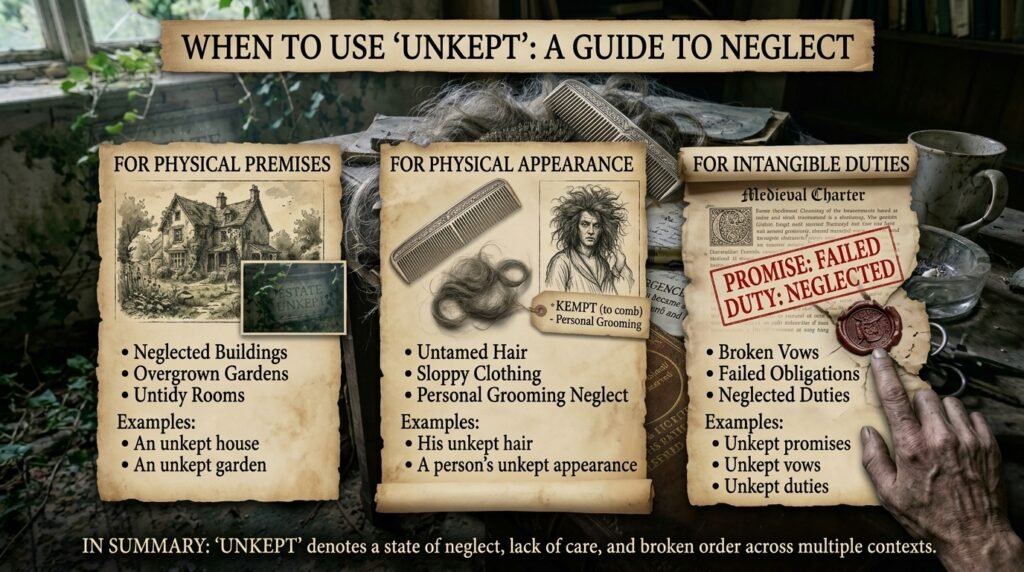
Use unkempt when something looks messy, untidy, or poorly groomed.
It is especially common when describing people’s appearance.
1. Use Unkempt for Hair
- His hair looked unkempt.
- She arrived with unkempt hair.
2. Use Unkempt for Beards
- He had an unkempt beard.
- His beard looked unkempt after the long trip.
3. Use Unkempt for Clothing
- His clothes looked unkempt.
- The worker appeared tired and unkempt.
4. Use Unkempt for Personal Appearance
- He looked unkempt after camping for several days.
- Her appearance seemed unkempt after the journey.
5. Use Unkempt for Untidy Places
- The backyard looked unkempt.
- The lawn became unkempt during the winter.
Remember: Use unkempt when the main idea is messiness or poor grooming.
Common Mistakes
Mistake 1: Using Unkept for Messy Hair
❌ His unkept hair looked terrible.
✅ His unkempt hair looked messy.
Use unkempt for messy or poorly groomed hair.
Mistake 2: Using Unkempt for a Broken Promise
❌ He made an unkempt promise.
✅ He made an unkept promise.
A promise can be unkept because someone failed to honor it.
Mistake 3: Treating Both Words as Exact Synonyms
❌ The two words always mean exactly the same thing.
✅ The two words overlap in some contexts, but their main meanings differ.
Unkept focuses on something not being kept.
Unkempt focuses on something being untidy.
Mistake 4: Assuming Unkept Is Always Incorrect
❌ Unkept is never a correct English word.
✅ Unkept is a legitimate English adjective.
Dictionaries recognize unkept with meanings related to promises and maintenance.
Mistake 5: Using Unkempt for Every Neglected Thing
❌ The company made an unkempt promise.
✅ The company made an unkept promise.
The word unkempt does not normally describe a promise.
Easy Trick to Remember
Use this simple memory trick:
Unkept = Not Kept
Look at the word:
Un + kept = unkept
Think:
An unkept promise was not kept.
Unkempt = Messy
Remember the extra M.
M = Messy
So:
Unkempt = Messy appearance
For example:
- Unkept promise = a promise that was not kept.
- Unkempt hair = hair that looks messy.
This trick makes the difference easier to remember.
Everyday Life Examples
1. At Work
An employee may make an unkept commitment.
For example:
The manager apologized for the unkept commitment.
Here, unkept means the commitment was not fulfilled.
2. At Home
A neglected backyard may look unkempt.
For example:
The backyard looked unkempt after months without care.
Here, unkempt means messy or untidy.
3. During Travel
Travel can affect someone’s appearance.
For example:
After two days of hiking, his hair looked unkempt.
The word describes his messy appearance.
4. In Relationships
People sometimes fail to keep promises.
For example:
She felt hurt because of his unkept promise.
The word describes a promise that was not fulfilled.
5. In Property Care
An abandoned property may look neglected.
For example:
The old house had an unkept garden.
You can also say:
The old house had an unkempt garden.
In this context, both words can work. Unkempt emphasizes untidiness, while unkept emphasizes poor maintenance.
Related Keywords
Use these related keyword variations naturally throughout your content:
- Unkept or unkempt meaning
- Unkept vs unkempt
- Is unkept a word?
- Is unkempt correct?
- Unkept meaning
- Unkempt meaning
- Difference between unkept and unkempt
- Unkept promise or unkempt promise
These variations can help cover related search intent without keyword stuffing.
Google Trends & Usage Data
Search interest can vary by country and over time. Google Trends uses relative search interest rather than fixed search volume.
For USA, UK, Australia, India, and Pakistan, searches around unkempt are likely tied to spelling and meaning questions.
Unkempt is the more recognizable word for messy appearance. Unkept remains useful in specific contexts, especially promises and maintenance.
Because Google Trends does not provide a permanent global ranking for these terms, exact country values can change with the selected date range. Therefore, avoid presenting fixed numbers without a live Trends export.

Country-Level Insight
| Country | Likely Search Intent | Main Usage Insight |
|---|---|---|
| USA | Spelling and meaning | Unkempt is common for appearance |
| UK | Vocabulary and usage | Both words are recognized |
| Australia | Spelling and meaning | Unkempt is common in appearance contexts |
| India | English learning | Confusion between both spellings is likely |
| Pakistan | English learning | Meaning and spelling searches are relevant |
SEO insight: The strongest content angle is the meaning difference. Users often need to know which word fits their sentence.
Comparison Table: Keyword Variations
| Keyword Variation | Search Intent | Best Answer |
|---|---|---|
| Unkept or unkempt | Comparison | Both are correct |
| Unkept vs unkempt | Difference | Meanings differ |
| Is unkept a word? | Spelling | Yes |
| Is unkempt a word? | Spelling | Yes |
| Unkept meaning | Definition | Not kept or fulfilled |
| Unkempt meaning | Definition | Messy or poorly groomed |
| Unkept promise | Usage | Correct phrase |
| Unkempt hair | Usage | Correct phrase |
Final Verdict
Both unkept and unkempt are correct words.
Choose unkept when something was not kept, fulfilled, or maintained.
Choose unkempt when something looks messy, untidy, or poorly groomed.
The easiest examples are:
- Unkept promise = a promise that was not fulfilled.
- Unkempt hair = hair that looks messy.
Do not treat the words as interchangeable in every sentence.
When discussing appearance, unkempt is usually the better choice. When discussing promises or maintenance, unkept often fits better.
Frequently Asked Questions
1. Is “unkept” a correct word?
Yes. Unkept is a correct English adjective. It can mean not kept, fulfilled, or maintained.
2. What is the difference between unkept and unkempt?
Unkept means not kept, fulfilled, or maintained. Unkempt means messy, untidy, or poorly groomed.
3. Which is more common, unkept or unkempt?
Unkempt is generally more familiar when describing messy appearance. Unkept has more specific uses.
4. Is unkempt suitable for formal writing?
Yes. Unkempt is a standard English adjective. You can use it in formal and professional writing when appropriate.
5. Why do people confuse unkept and unkempt?
The words look and sound similar. Both can relate to things that lack proper care. The extra m makes their meanings easier to distinguish.
Conclusion
Unkept Or Unkempt is a common English word-choice confusion. Both words are correct, but they serve different purposes. Unkept means something was not kept, fulfilled, or properly maintained. It commonly appears with words such as promises, commitments, gardens, and properties. Unkempt means messy, untidy, or poorly groomed. It commonly describes hair, beards, clothing, appearance, and neglected places.
Remember the easiest trick: unkept means not kept, while unkempt means messy. The extra M can remind you of “messy.” Use the context to choose the right word. This simple distinction will help you write clearer and more natural English.

Daniel Foster is a comparison analyst and content strategist at Comparelly.com. He specializes in researching products, services, tools, and industry trends to create clear, unbiased comparison guides. With a focus on accuracy and practical insights, Daniel helps readers understand key differences and make informed decisions with confidence. His goal is to simplify complex choices through trustworthy, easy-to-understand content.